
Can Scratchy Wool Be Saved? What Really Helps – and Where the Limits Are

You've finally finished your project.
Every stitch is exactly where it should be. The colour is beautiful, and you can't wait to put on your new sweater or wrap your shawl around your shoulders.
Then, after just a few seconds, disappointment sets in.
"Oh no… it's scratchy!"
The good news is that some yarns really do become noticeably softer after their first wash. Others can be made more comfortable to wear with the right care.
The less encouraging news is that not every scratchy yarn can be "saved." That's exactly why it's worth taking a closer look at the real cause.
Because in many cases, it's the fibre itself—not the care routine—that determines how comfortable a finished project feels.
Why Does Wool Feel Scratchy?
Let's start with one of the most common misconceptions.
Many people believe they're allergic to wool.
In reality, a true allergy to the wool fibre itself is considered rare according to current scientific knowledge. In most cases, the uncomfortable scratchy feeling isn't caused by an allergic reaction of the immune system but by mechanical irritation of the skin.
The key factor is the diameter of the individual fibres, measured in microns (µm).

The finer the fibre, the more easily it bends when it comes into contact with your skin. As a result, most people perceive it as soft and comfortable.
Coarser fibres, on the other hand, are stiffer. When they touch sensitive skin, they can stimulate the tiny nerve endings on the surface. That slight pricking sensation is exactly what we perceive as scratchy.
This is why fine Merino wool usually feels much softer than rustic wool or fibres from traditional heritage sheep breeds. It doesn't mean that one fibre is "better" than another—they were simply bred for different purposes.
The way a yarn is spun also plays an important role. The amount of twist, the number of fibre ends that protrude from the yarn and the surface texture of the finished fabric all influence how the project feels against the skin.
There's another factor that's often overlooked:
Our skin isn't all the same.
A yarn that feels wonderfully soft to one knitter or crocheter may already feel scratchy to someone else. Sensitive skin, dry skin or skin conditions such as eczema can make even relatively fine natural fibres feel uncomfortable.
In short:
Not every wool yarn is scratchy—and not every scratchy feeling has the same cause.
The combination of fibre diameter, yarn construction, spinning, finishing and your individual skin sensitivity determines how comfortable a finished project will feel. That's why two people can have completely different experiences with exactly the same yarn.
Why Does a Yarn Sometimes Feel Scratchier After It's Been Made Up?
You may have experienced this yourself.
The yarn felt wonderfully soft when you first picked it up in the yarn shop or unpacked it at home. While knitting or crocheting, nothing seemed unusual either.
But as soon as your sweater, scarf or shawl is finished and you wear it for the first time, it suddenly feels much scratchier than you expected.
How is that possible?

One reason is that our perception of a yarn changes once it becomes a larger fabric. A single strand only touches the skin at a few points. A finished garment, however, lies against a much larger area of the body and moves with every step you take. As a result, even subtle differences in fibre structure become far more noticeable.
The construction of the knitted or crocheted fabric also plays a role. Depending on the stitch pattern, fabric density and the yarn itself, individual fibres may stand out more or the surface may feel slightly firmer. That doesn't mean the yarn has become worse—it simply reveals its true character once it has been worked up.
The first wash is equally important. Many natural fibres don't fully relax until they've been washed. Any remaining production residues are rinsed away, the fibres absorb moisture and settle, and the stitch pattern often changes slightly as well. This can noticeably improve not only the appearance of your project but also the way it feels.
For that reason, I never recommend judging a project immediately after casting off.
Only after its first proper wash will you know how the yarn is likely to feel in everyday wear. Quite often, that initial impression of "scratchiness" disappears completely. Sometimes it doesn't—and that's exactly why it's worth waiting before making your final judgement.
What Really Helps?
Before reaching for hair conditioner, lanolin or any other home remedy, there is one important rule to keep in mind:
Always check the care instructions on the yarn label first.
Not every yarn tolerates the same treatment. Pure wool reacts differently from superwash wool, alpaca differently from cotton, and a yarn blended with synthetic fibres behaves differently again from a pure natural-fibre yarn.
Temperature, agitation and drying can all determine whether a project simply becomes softer – or accidentally felts, shrinks or loses its shape.
Ideally, test any treatment first on your swatch or on an inconspicuous area. It may be less exciting than a supposed internet miracle cure, but it can save an entire project from damage.
1. The First Wash – The Most Important Step
A finished knitting or crochet project should only be judged properly after its first appropriate wash.
During spinning, dyeing and further processing, small amounts of processing and finishing agents may be used. Depending on the manufacturing method, these can include spinning oils or lubricants that make the fibres easier to process.
Not every yarn contains noticeable residues, and many yarns are already thoroughly cleaned during production. Even so, the first wash can remove excess dye, dust and any remaining processing residues.
Textile spinning finishes form a thin layer on the surface of the fibre and can influence, among other things, friction and flexibility.
At least as important, however, is what happens to the finished fabric itself:

The yarns can relax, the stitches settle and the individual fibres redistribute within the fabric.
Especially with natural fibres, this often changes not only the appearance of the stitches but also the overall handle of the fabric.
However, this does not mean that every wool yarn automatically becomes soft after the first wash.
A surface that initially feels slightly stiff or uneven may settle considerably.
Coarse, stiff fibres, however, remain fundamentally coarse even after washing.
How to Proceed as Gently as Possible
Always follow the manufacturer's care instructions first.
If hand washing is recommended, fill a sufficiently large basin with clean, lukewarm water and add only a small amount of suitable wool detergent. The project should have enough room to lie freely in the water.
Gently press it beneath the surface and leave it to soak for a few minutes.
Rubbing, brushing, scrubbing or vigorous kneading are all out of the question.
Sudden temperature changes and unnecessary agitation can also increase the risk of feltable wool fibres locking together and causing the project to shrink.
For hand washing wool garments, I recommend:
lukewarm water,
a suitable wool detergent,
around ten minutes of soaking,
followed by thorough rinsing.
After washing, gently press out the water – do not wring the project.
You can then roll it in a towel and press it gently before laying it flat to dry and shaping it carefully.
My Most Important Tip
Do not judge a project immediately after casting off or finishing it.
Only after the recommended wash and once it has dried completely will you know how it truly feels.
2. A Suitable Wool Detergent
When caring for animal fibres, it is not only the washing temperature that matters, but also the choice of detergent.
Wool consists mainly of keratin, which is a protein.
For that reason, strongly alkaline detergents, bleach and some enzyme-based laundry detergents are unsuitable for wool fibres.
So-called biological detergents in particular may contain enzymes designed to break down protein-based stains. That makes them a poor choice for protein-based fibres.
I recommend a mild, preferably pH-neutral detergent that is specifically suitable for wool.
It is also worth saying clearly:
Bleach and unsuitable enzyme-based detergents are best avoided.
A wool detergent does not make a coarse fibre finer.
Its real strength lies in cleaning the project gently without unnecessarily attacking the surface or increasing the risk of felting through unsuitable treatment.
Using more detergent does not produce better results.
Quite the opposite: if detergent residues remain in the project, the surface may feel dull, stiff or even more uncomfortable than before.
So here too, the rule is:
Use sparingly and rinse thoroughly.
For cotton, linen and synthetic yarns, a wool detergent is not necessarily required.
In those cases, you should still follow the yarn label and choose a mild detergent that is suitable for the particular fibre.
3. Washing and Blocking – The Real Finishing Process
Blocking is often seen simply as a method used to make shawls larger, lace patterns more defined or sweaters more even.

In reality, however, it is an important part of the finishing process and can also influence how the fabric feels.
After washing, the damp project is laid into its desired shape or – depending on the project and material – gently stretched.
This allows the stitches to settle more evenly, the tension to distribute itself and the pattern to open up.
Especially with lace, openwork patterns and lightweight shawls, the surface often appears smoother and airier after blocking.
This can make the project feel less dense and therefore more comfortable against the skin.
Even a yarn that felt slightly stiff immediately after knitting or crocheting may become more flexible and supple through this wet-finishing process.
However, one distinction is important:
Blocking primarily changes the structure of the finished project – not the diameter of the individual fibres.
If coarse or stiff fibre ends protrude from the yarn, blocking may help them lie somewhat more neatly.
They will not disappear completely.
Not every project needs to be heavily stretched either.
A sweater is usually simply washed, gently shaped and laid flat to dry.
A lace shawl, on the other hand, can be stretched more deliberately and carefully.
Too much tension can distort a garment or permanently overstretch the stitches.
Blended yarns add another factor, because the different fibres they contain can react in different ways.
That is why your swatch is once again your best test:
Wash and block it exactly as you plan to treat the finished project later.
4. Lanolin – Useful, but Not a Universal Softener
Lanolin is often recommended as a natural care product for wool.
However, it is worth taking a closer look.
Lanolin, also known as wool wax, is a waxy substance produced by the sebaceous glands of sheep. It originally protects the wool fibres from moisture and weather.
During the industrial cleaning of raw wool, a large proportion of this wool wax is removed and then recovered.
A lanolin treatment can be useful for certain wool products, particularly when a slightly conditioning or water-repellent effect is desired.
It is commonly used, for example, with:
wool nappy covers,
outdoor wool garments,
or heavily used pure-wool items.
For a scratchy sweater, however, lanolin is not a reliable miracle cure.
A very small amount can make the surface appear slightly more supple.
Too much lanolin, however, can quickly leave the project feeling greasy, sticky or uneven.
It can also trap odours, cause stains or make later cleaning more difficult.
Above all, this remains true:
Lanolin changes neither the fibre diameter nor the stiffness of a coarse wool fibre.

Reconditioning scratchy wool from a traditional sheep breed will not turn it into fine Merino.
Anyone who still wishes to try lanolin should therefore:
use it extremely sparingly,
emulsify it completely,
and test the treatment on a swatch first.
For cotton, linen, acrylic or other non-animal fibres, lanolin is neither a typical care method nor a sensible rescue treatment.
With blended yarns, the effect depends heavily on the fibre composition.
People who react sensitively to lanolin or certain wool-care products should also avoid it or first carry out a small skin and material test.
5. The Hair Conditioner Method – Worth a Try, but with Limits
Hardly any home remedy is recommended online as often as hair conditioner.
The finished project is soaked in it and is then supposedly transformed into something "buttery soft".
The idea is not entirely unfounded.
Both human hair and animal wool fibres consist mainly of keratin.
Many conditioners contain conditioning ingredients that deposit on the surface, reduce friction and make hair feel smoother or easier to comb.
Transferred to a wool project, such a coating may temporarily change the surface feel.
Individual protruding fibres may lie slightly flatter, making the project feel less rough.
But the method has clear limits:
Conditioner does not make the individual wool fibre finer.
It does not remove coarse guard hairs and it does not change the fundamental quality of the material.
It simply coats the surface with certain conditioning substances.
How strong the effect is and how long it lasts depends on:
the product,
the fibre,
the amount used,
and subsequent washing.
There is no solid textile basis for the widespread claim that hair conditioner can make every scratchy wool project permanently soft.
It is mainly based on experience within the knitting and crochet community rather than on a reliably standardised treatment.
There is another point to consider:
Hair conditioner is formulated for human hair and for use in contact with the skin – not as a textile-care product.
Some products contain silicones, fragrances, oils, colourants or other additives that may leave residues, cause stains or create an unpredictable feel on the yarn.
Would You Still Like to Try It?
Then I would proceed as cautiously as possible:
Test the method first on the washed swatch.
Use only a very small amount of a simple conditioner.
Dissolve it completely in lukewarm water before adding the project.
Do not rub or knead the wool.
Rinse carefully afterwards, unless the product specifically states otherwise.
Dry the project flat and assess it only once it is completely dry.
If the swatch becomes stained, greasy, heavily perfumed or loses its original elasticity, the method should not be used on the finished project.
My Honest Assessment
Conditioner can make some yarns feel slightly more pleasant.
However, it is neither my first recommendation nor a guarantee.
And even conditioner cannot turn a naturally coarse fibre into skin-friendly Merino wool.
What Is the Most Sensible Order of Treatment?
If a finished project feels unpleasantly scratchy, I would not immediately combine several different treatments.
Otherwise, you will not know what actually helped – or which treatment may have left residues behind.
It is better to proceed step by step:
Check the yarn label and fibre composition.
Wash the project using a suitable, mild detergent.
Shape it properly and allow it to dry completely.
Wear or test it again afterwards.
If the improvement is not sufficient, try any further treatment on the swatch first.
Be honest about whether the yarn is suitable for direct skin contact at all.
Often, the first proper wash followed by blocking is enough.
If the project still feels noticeably uncomfortable afterwards, the cause is probably less about removable residues and more about the fibre itself.
At that point, the aim is no longer to "retrain" the yarn using one home remedy after another.
Instead, a realistic decision is needed:
Can the project be worn over a thin shirt?
Could it be lined?
Or would another use be the better option?
Because care can improve the character of a yarn.
It cannot change it completely.
What Usually Doesn't Help?

Anyone searching online for ways to make scratchy wool feel softer will quickly come across a wide range of supposed miracle cures. Some of these recommendations have been repeated in forums, blogs and on social media for years – often without anyone questioning whether they actually work.
That does not automatically mean that every personal experience is wrong. After all, the way a finished project feels can certainly change subjectively.
From a textile point of view, however, there are several methods whose benefits are difficult to explain or for which there is very little scientific evidence.
Freezing Finished Projects
This tip appears again and again.
The idea is that the cold will soften the fibres or alter their structure.
However, there is no reliable textile-science evidence to support this claim.
Normal freezer temperatures do not permanently change either the diameter or the surface structure of a wool fibre. As soon as the project returns to room temperature, the fibres have the same properties as before.
Anyone who still notices a difference may actually be reacting to the effects of airing, washing or simply to different expectations – rather than to the cold itself.
Vinegar as a Miracle Cure
Vinegar is often recommended as an all-purpose solution.
Under certain circumstances, a small amount of vinegar in the rinse water can be useful, for example to help remove detergent residues or slightly adjust the pH of the water.
However, vinegar cannot:
make coarse wool fibres finer.
Nor can it alter the structure or diameter of the fibres.
So anyone hoping to turn a rustic wool yarn into soft Merino will inevitably be disappointed.
Fabric Softener
Few home remedies are discussed as controversially as fabric softener.
Although it can change the feel of some textiles, experts generally do not recommend using it on wool.
Fabric softener coats the fibres with a thin film. In the short term, this may make a project feel smoother. At the same time, however, it can interfere with the wool fibre's natural properties.
Depending on the product, elasticity, moisture absorption and breathability may be reduced. Residues can also be difficult to rinse out completely.
For this reason, many yarn manufacturers and wool-care experts recommend using a suitable wool detergent instead.
When Home Remedies Promise More Than They Can Deliver
Many of these tips have one thing in common:
They attempt to change the natural properties of the fibre after the project has already been made.
And that is exactly where their limitations lie.
A wool fibre has certain natural characteristics determined by its origin, fibre diameter and processing. Care can improve the handle, smooth the surface or help the stitch pattern settle more evenly.
But it cannot fundamentally change the fibre itself.
That is why supposed miracle cures should always be approached with a certain amount of scepticism.
Not everything that has been recommended thousands of times on social media stands up to closer technical scrutiny.
Sometimes the most honest answer is also the simplest:
The yarn is simply showing the natural character of its fibres.
When Does Every Care Method Reach Its Limits?
As lovely as it would be, sometimes there simply is no perfect solution.
Most care methods can improve the handle of a yarn, make its surface feel slightly smoother or make the finished project more comfortable to wear. However, they cannot change the fundamental properties of the fibre itself.
Rustic wool will always remain rustic wool.
Even with the most careful treatment, wool from a traditional heritage sheep breed will never achieve the softness of fine Merino. Linen will always feel different from cotton, just as mohair will always feel different from alpaca.
That does not mean these yarns are inferior.
Quite the opposite: it is often their distinctive characteristics that make them particularly interesting for certain projects. Robust wool offers durability and warmth, linen provides a pleasantly cool feel in summer, and mohair is valued for its soft, fluffy halo.
Every fibre has qualities that make it suitable for certain purposes – and that is where it can truly shine.
Before trying to rescue a scratchy project, it is therefore worth asking one simple question:
Is the yarn really unsuitable – or is it simply not the right yarn for this particular project?
A turtleneck sweater or scarf is in constant contact with sensitive skin. In this case, most people will naturally prefer a yarn that feels as soft as possible.
A jacket, waistcoat, bag, blanket or basket has very different requirements. For these projects, a slightly firmer or more robust fibre may even be the better choice.
Sometimes the most honest solution is therefore not to try one home remedy after another, but to use the finished project differently or choose the yarn more deliberately for another purpose in future.
At first, that realisation may feel disappointing.
I now find it rather reassuring.
It takes away the pressure to force every yarn to become something it was never meant to be.
Even the best care in the world can improve a yarn – but it cannot change its true character.
And that is exactly why a comfortable finished project often begins much earlier:
with choosing the right yarn for the right project.
Perhaps the Yarn Was Never the Problem
After many years of knitting and crocheting, I've learned one important lesson:
There are no perfect yarns – only the right yarn for the right project.

Every fibre has its own unique characteristics. Some are prized for their exceptional softness, while others stand out for their stability, durability or beautifully rustic stitch definition.
That's why it's worth looking at a yarn not in isolation, but always in the context of the project you want to make.
For example, a more textured wool yarn can be an excellent choice for:
jackets and coats,
waistcoats,
baskets and bags,
cushions,
blankets,
seat pads,
and other home décor projects.
In these cases, shape retention, warmth, durability and character are often far more important than an exceptionally soft handle.
The situation is quite different for garments that are worn directly against sensitive skin.
A turtleneck sweater, scarf or cowl may rest against your neck for hours at a time. Even a fibre that most people consider comfortable can feel scratchy in that area—especially if you have sensitive or dry skin.
In these situations, the problem often isn't the yarn itself, but how it's being used.
That doesn't mean the project has failed or that the yarn is of poor quality.
It simply means that the fibre's natural qualities may be better suited to a different purpose.
Sometimes, a small adjustment is all that's needed.

A sweater can be worn over a lightweight shirt. A scarf can become a cosy throw for the sofa. Or the remaining yarn can later be turned into a bag or another home accessory.
Personally, I find this thought incredibly reassuring.
It reminds us that a yarn isn't inherently "good" or "bad."
It simply has characteristics that make it perfect for some projects—and less suitable for others.
Once you understand that, you begin to look at yarn selection in a completely different way.
Instead of asking:
"Is this yarn soft enough?"
you start asking the much more useful question:
"Is this the right yarn for this particular project?"
Related Article
Would you like to understand before buying your yarn which fibre is best suited for your next project? In my article "Alpaca, Merino, Cotton & More – Which Yarn Is Right for Your Project?", I take a closer look at different fibres and explain where each one performs best.
After all, a comfortable project often begins not with the right care, but with choosing the right yarn in the first place.
Read the Yarn Guide🧶 Conclusion
If your finished knitting or crochet project feels scratchy, it's naturally disappointing at first. But before you tuck it away in the cupboard—or even unravel it—it's worth taking a moment to pause.
Many yarns become noticeably more pleasant to the touch after their first proper wash. A gentle wool detergent, careful blocking and—depending on the fibre—the right care routine can make a real difference. That's why I would never judge a project before it has been washed.
Just as important, however, is understanding that every fibre has its own natural characteristics. Good care can support a yarn, improve its surface and make it more comfortable to wear—but it cannot completely change the character of the fibre itself.
Perhaps that is the most important message of this article:
The goal isn't to turn every yarn into an ultra-soft yarn. The goal is to understand the qualities of each fibre and use them for the project they're best suited for.
With a little knowledge about fibres, care and material properties, many disappointments can be avoided. And sometimes, what first seems like a "scratchy" yarn turns out to be the perfect choice for an entirely different project.
Because great knitting and crochet don't begin with the first stitch.
They begin with choosing the right yarn for the right project.
💬 What about you?
Have you ever managed to rescue a scratchy knitting or crochet project? Or did you eventually realise that the yarn simply wasn't the right choice?
As always, I'd love to hear about your experiences, favourite fibres and best tips in my Facebook group 😊
#strickenimtrend #knitting #crochet #wool #yarn #yarnknowledge #woolcare
Because sometimes the success of a project doesn't depend on the yarn itself—but on understanding it.
With love,
Kathrin 🌸
Would you like to dive even deeper into my world of stitches?
Discover my patterns, browse the blog or join the community!
Popular patterns from stricken-im-trend.com
Maybe your next project is already here –
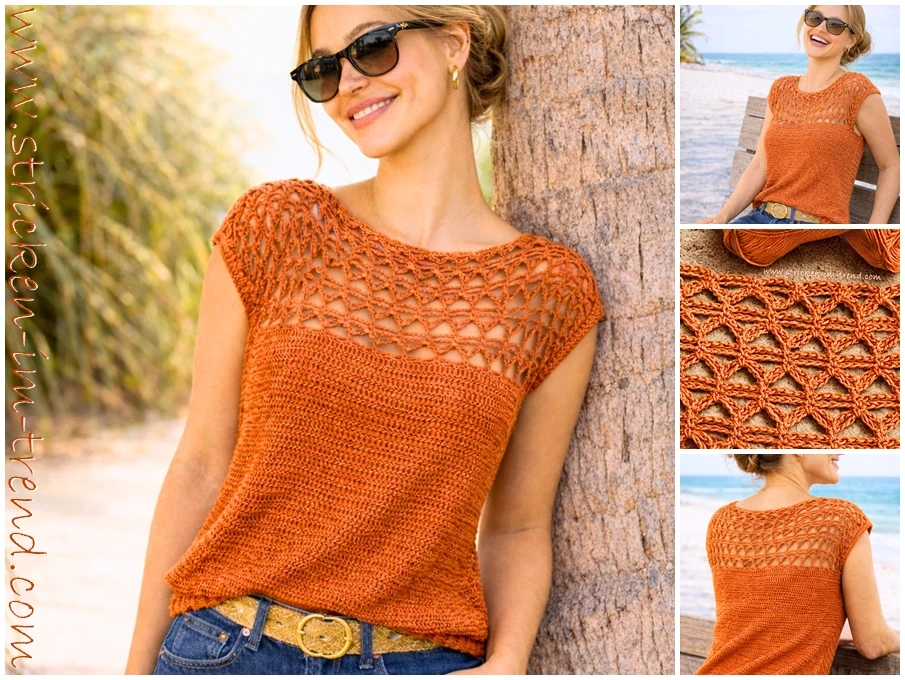
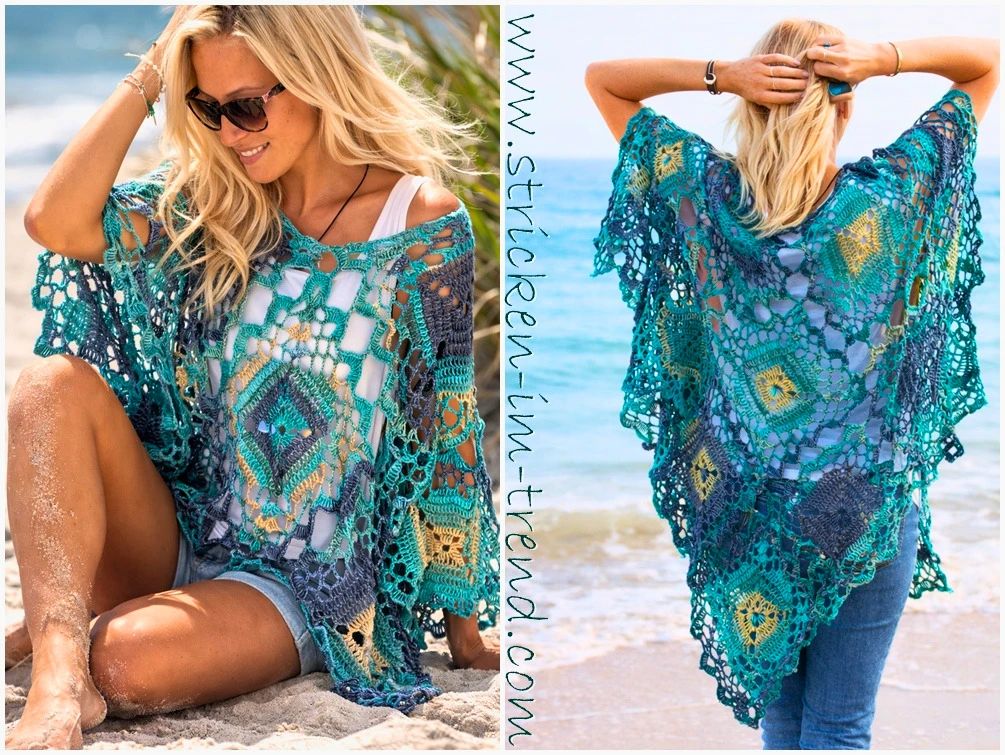
discover some popular designs from the stricken-im-trend collection.
Style knows no Size.
An initiative by Kathrin Parlatan | stricken-im-trend.com