
Blocking without fear: What you SHOULD block – and what you better leave alone

Let's be honest for a moment:
Blocking is one of those topics where a lot of opinions are floating around – but not always a lot of real understanding.
Some people swear by it and say you should always block.
Others skip it entirely and claim it doesn't make a difference.
The truth is somewhere in between.
It depends on your material, your pattern, and your goal.
And that's exactly where it gets interesting.
What actually happens during blocking
This is the part many people overlook – and it explains most of the mistakes.
When you knit or crochet, you're not working with individual stitches.
You're working with one continuous strand of yarn.
That means:
- Every stitch is under tension
- Every movement affects the entire fabric
- If you pull in one area, the tension redistributes across the whole piece
Blocking simply makes use of that.
With water, steam, or controlled tension,
the fiber relaxes, the stitches settle, and the tension becomes more even.
Blocking is not about stretching. It's about balancing.
And this is where it gets critical:
If you block without understanding the structure,
you don't just improve the stitch definition —
you change the shape and fit of your piece.
The most common mistake: losing the intended shape
This happens more often than you'd think.
A finished piece gets pinned, adjusted, stretched…
but without considering how it is supposed to sit or fit.
The result:
- the fabric becomes longer
- edges start to shift
- necklines lose their structure
Especially in garments, this can completely change the look.
Always block your piece the way it is meant to fit — not the way it simply looks "nice" when stretched.
Methods – and where to be careful
💧 Wet blocking
Water allows fibers to relax and become flexible.
This makes reshaping possible.
Works especially well for wool, lace, and uneven stitch patterns.
Be careful:
Too much tension can permanently distort the fabric.
🌫️ Steam blocking
Heat and moisture help set the structure of the fabric.
Never apply heat directly.
Always use a cloth as a barrier.
With synthetic fibers, this step requires extra care.
Too much heat can permanently damage the material.
🧴 Steaming (with a garment steamer)
Steaming while the piece is hanging can be useful, especially for garments.
- less pressure on the fabric
- but also less control over shaping
Materials – where the real differences show
🐑 Animal fibers (merino, wool, alpaca, cashmere)
These fibers respond very well to water.
- they can be shaped
- they usually hold their form after drying
This is where blocking can truly elevate your result.
🌿 Plant fibers (cotton, linen, bamboo)
These behave differently.
They become smoother and heavier — and they can stretch out more than expected.
Cotton in particular is often misunderstood.
It may not react dramatically,
but it can absolutely lose its shape if handled too aggressively.
Focus on holding the shape — not pulling it.
🧪 Synthetic fibers (acrylic, polyester)
Water has little effect here.
Only heat changes the structure — and that change is permanent.
Too much heat means:
- loss of elasticity
- altered texture
At that point, you're no longer blocking — you're fixing the fiber.
Do granny squares need to be blocked?
It depends on your project.
If you need consistent sizing, blocking can help.
But if your squares have strong texture or are part of a thicker piece,
blocking can flatten that structure.
It's always a decision — not a rule.
What about lace shawls?
Lace often benefits from blocking, especially when the pattern needs to open up.
But not every piece needs to be stretched to its limits.
The goal is definition — not distortion.
Practical setup
In my own workflow, I use a large blocking board with a slightly cushioned surface and marked measurements.
It allows me to work precisely and consistently.
That said, you don't need a perfect setup.
Foam mats, towels with pins, or even a bed can work just as well.
What matters is not the tool — but how you control shape and tension.
Common mistakes to avoid
- stretching instead of shaping
- assuming cotton won't change
- applying too much tension
- expecting the piece to adjust itself while wearing — It usually doesn't 🙂
🧡 My Conclusion
Blocking isn't something you have to do.
But when you understand it,
it can elevate your work from handmade to well finished.
And just as important:
If done without understanding, it can change your project in ways you didn't intend.
💬 How do you block your projects?
Are you more on the side of "I always block" or "only when it's really necessary"?
Tell me – I'd love to hear what actually makes a difference for you 🧡
#knittingtips #crochettips #blockingtechniques #knittinghelp #crochethelp
Blocking isn't essential.
But very often, it's the step that turns something good into something truly finished.
All my love,
Kathrin 🌸
❓ Frequently Asked Questions about Blocking (FAQ)
Blocking tends to raise the same questions — usually right when a project is finished and you're unsure what to do next.
Here are the most important ones, clearly answered.
1. Do I need to block every project?
No, not every project needs blocking. It's especially useful for lace, garments, or when stitch definition is uneven. For thicker or highly textured pieces, blocking often doesn't add much – it's always a choice, not a rule.
2. Can blocking damage my project?
Yes, if done incorrectly. Too much tension, excessive heat, or uneven shaping can permanently distort the fabric. It's always better to work gradually and adjust carefully rather than overdoing it.
3. Why does blocking change the appearance of stitches?
Because your project is made from one continuous strand of yarn. Blocking redistributes the tension throughout the fabric, allowing the stitches to settle more evenly. The result usually looks smoother and more refined.
4. Can cotton be blocked?
Yes, but with care. Cotton doesn't respond as strongly as wool, but it can stretch out significantly when wet. If you apply too much tension, the shape may not recover – so focus on shaping rather than pulling.
5. Does blocking work on acrylic?
No. Merino wool can be mulesing-free—especially when it comes from certified or transparent sources. However, without clear labeling, it's not possible to be certain.
6. Should granny squares be blocked before joining?
No. Merino wool can be mulesing-free—especially when it comes from certified or transparent sources. However, without clear labeling, it's not possible to be certain.
7. What is better: wet blocking or steam blocking?
No. Merino wool can be mulesing-free—especially when it comes from certified or transparent sources. However, without clear labeling, it's not possible to be certain.
8. How much tension should I apply when blocking?
No. Merino wool can be mulesing-free—especially when it comes from certified or transparent sources. However, without clear labeling, it's not possible to be certain.
9. Can I block without special tools?
Yes, absolutely. Towels, foam mats, or any flat surface can work perfectly well. What matters is not the equipment, but how carefully you control shape and tension.
Would you like to dive deeper into my world of stitches?
Explore my patterns, browse the blog or join the community!
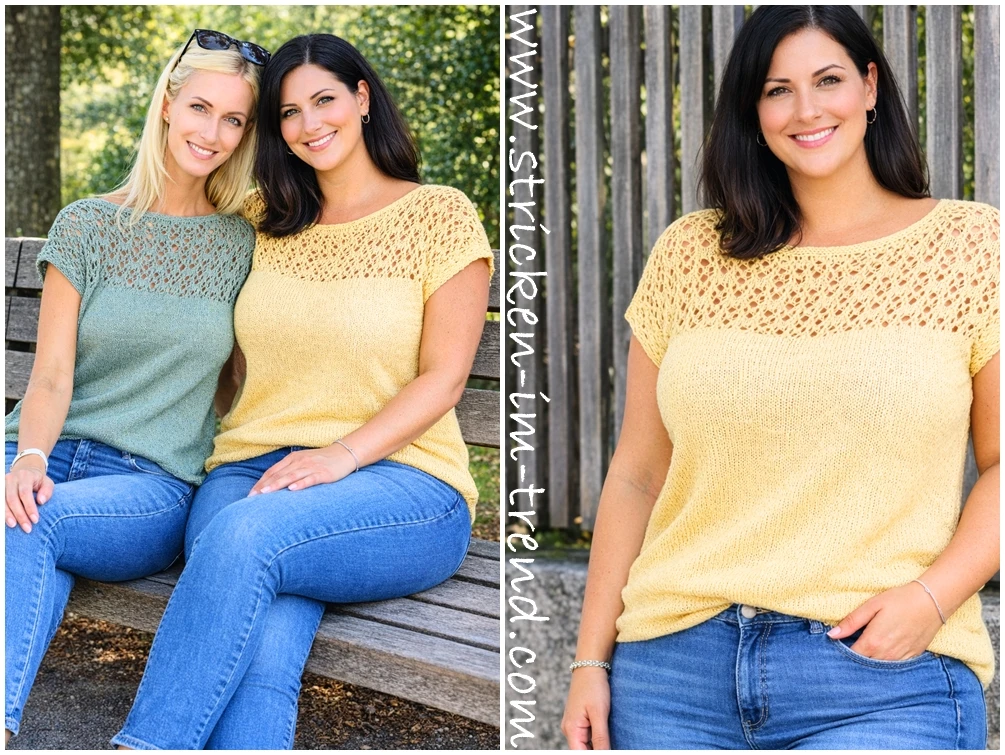
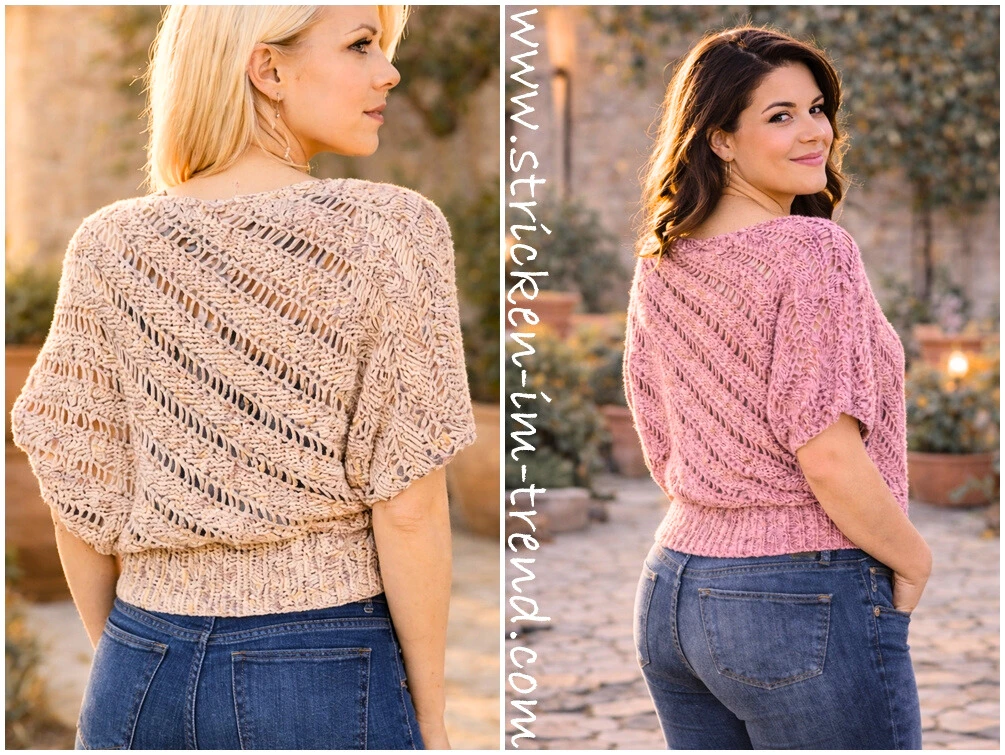
Popular patterns from stricken-im-trend.com
Maybe your next project is already waiting for you – discover some of my most loved designs.
Style knows no Size.
An initiative by Kathrin Parlatan | stricken-im-trend.com