
#HistoryStitch: Between Needles and Norms – How Needlework Shaped Women's Roles

Needlework tells stories – not only through every single stitch, but also through the lives of the people who practiced it across generations.
Some of those stories are still surprising today.
When Every Stitch Meant More Than Just a Hobby
Today, we knit and crochet because we enjoy it.

We create to relax, express our creativity, or simply experience the satisfaction of making something with our own hands. For many of us, a cosy evening with yarn and needles feels completely natural. We rarely stop to wonder why these crafts have become such an ordinary part of our lives.
But it wasn't always that way.
For centuries, needlework was far more than a leisure activity. It was part of education, a reflection of social expectations, and for many women, an economic necessity. At the same time, it offered opportunities that were otherwise difficult to find: earning an income, passing on valuable skills, and building a sense of community.
The history of knitting, sewing, and embroidery is therefore about much more than stitches and patterns.
It is also a story of freedom, conformity, resilience, and social change.
Needlework as a Lesson for Life

During the 18th and especially the 19th century, needlework became an essential part of girls' education in many European countries. Knitting, sewing, mending, and embroidery were taught as naturally as reading or arithmetic. The goal, however, extended far beyond learning practical household skills.
Needlework was intended to cultivate qualities that society considered desirable for women: diligence, patience, orderliness, modesty, and obedience.
A carefully darned stocking or a neatly sewn garment was seen as visible proof of good upbringing.
The message was clear.
A young girl was expected to become a capable housewife, manage a household efficiently, spend money wisely, and care for her husband and children.
From today's perspective, these expectations may seem outdated or even unsettling.
At the time, however, they reflected the social ideals of the era.
Was Needlework a Tool of Oppression?
The answer is both yes—and no.

On the one hand, needlework was undoubtedly used to reinforce traditional gender roles. Girls spent countless hours learning textile skills, while boys were more likely to receive training that prepared them for trades, business, or higher education.
On the other hand, reducing needlework to a symbol of female oppression would overlook an important part of history.
For countless women, it represented much more than a duty.
It was a means of survival.
When Every Stitch Helped Feed a Family
Long before social security systems or modern labour laws existed, many women worked from home.
They knitted stockings, sewed clothing, produced lace, or spun yarn. Merchants supplied the materials and later collected the finished goods.
The wages were modest.
Yet that small income often made the difference between hardship and security. For many families, every pair of stockings sold meant food on the table or enough money to get through another winter.
Widows and unmarried women in particular were sometimes able to maintain a degree of financial independence through textile work at a time when few other professions were open to them.
Needlework may not have made them wealthy, but it offered something equally valuable: the chance to contribute, earn, and retain a measure of independence.
Surprise: Knitting Wasn't Always Women's Work
When we think about knitting today, a familiar image often comes to mind.
A woman sitting comfortably with a basket of yarn, a pair of knitting needles, and perhaps a cosy armchair by the window.
It feels completely natural.
Historically, however, that image is surprisingly recent.

During the Middle Ages and the early modern period, many textile professions were dominated by men. Weavers, stocking knitters, and other skilled textile craftsmen were organised into guilds across Europe. Becoming a master craftsman required years of apprenticeship, followed by the completion of demanding master pieces that demonstrated exceptional skill.
Knitting was regarded as a respected profession — not a pastime, and certainly not an activity reserved for women.
Only during the 18th and, even more so, the 19th century did public perception begin to change. As needlework became an essential part of girls' education, generation after generation grew up learning that knitting, sewing, and embroidery were considered important domestic skills for their future role as wives and mothers.
Gradually, a stereotype emerged that still influences us today:
Knitting became "women's work."
Yet history tells a very different story.
The association between knitting and femininity was not inevitable—it was shaped by centuries of education, social expectations, and changing cultural norms.
To this day, those ideas continue to influence how many people perceive textile crafts.
Personally, I smile every time I look at the statistics in my own online shops.
A surprisingly large number of my knitting and crochet patterns are purchased by men. Some knit for their partners, some create handmade gifts for children or grandchildren, while others simply enjoy the craft for themselves.
And honestly?
I think that's wonderful.
Creativity has never belonged to one gender.
Perhaps, in a way, we're coming full circle.
Because historically, knitting was never exclusively women's work — it only became associated with women over time.
Four Fascinating Moments in Knitting History
📜 When Knitting Was a Profession for Men
As early as the 16th century, knitting guilds existed in several European cities. Becoming a master knitter required years of training and the successful completion of intricate master pieces that demonstrated technical excellence.
At the time, knitting was considered a highly skilled profession—not simply a domestic pastime.
📜 When Knitting Needles Helped Feed Families
Throughout the 18th and 19th centuries, women across Europe spent long evenings knitting stockings for local merchants.
The pay was modest.
Yet those few extra coins often meant the difference between poverty and making it through another winter.
Every completed pair of stockings represented hope as much as income.
📜 Knitting in Times of War
During the First World War, knitting campaigns emerged across many countries.

Women, men, and even children knitted socks, scarves, gloves, and other warm clothing for soldiers serving at the front. Newspapers published knitting patterns, charitable organisations collected yarn, and entire communities contributed to the effort.
Today, it may seem contradictory that such a peaceful craft became part of the war effort.
Yet this chapter of history highlights just how important knitting had become in everyday society.
📜 The Famous Tricoteuses
One of the most famous—and controversial—stories comes from the French Revolution.

Contemporary accounts describe women knitting while attending public trials and even executions. These women later became known as the Tricoteuses.
Modern historians, however, continue to debate how much of this image reflects reality and how much was exaggerated in later accounts.
Even so, the story illustrates that knitting was not always viewed as a quiet domestic pastime. At times, it also became a powerful political symbol.
Between Duty and Freedom
Perhaps this is where the greatest transformation lies.
For centuries, needlework was a necessity.
Today, it is a choice.
We knit and crochet because it brings us joy. We create because we enjoy making something with our own hands, because it helps us relax, because we value sustainability, or simply because it gives us a welcome break from everyday life.
What was once a social obligation has become, for many people, a source of creativity, self-expression, and personal freedom.
Myth or Fact?
❌ Myth: Knitting has always been women's work.
✅ Fact: For centuries, many textile professions were dominated by men. It was only later that changing social roles turned knitting into what was seen as a "typically feminine" activity.
❌ Myth: Needlework was simply a pastime.
✅ Fact: For countless families, it provided an essential source of income and often helped secure their livelihood.
❌ Myth: Girls learned needlework only to make clothes.
✅ Fact: Needlework was also intended to teach qualities that society considered desirable at the time, including diligence, orderliness, patience, modesty, and obedience.
🧶 My Personal Thoughts
When I'm designing a new knitting or crochet pattern, my focus is usually on colours, yarns, textures, and the people who will one day enjoy making it.
It's easy to forget that our shared hobby carries such a long and fascinating history.
Perhaps that's exactly what makes handmade crafts so special.
Every stitch connects the past with the present.
It reminds us how society has changed over the centuries — and that creativity has never belonged to just one gender.
No matter who picks up the needles, what truly matters is the joy of creating something with your own hands.
And maybe that's why knitting and crochet continue to inspire me today more than ever before.
💬 History Helps Us See the Present Differently
Were you surprised to learn that knitting wasn't always considered women's work? Or do you know men who love to knit or crochet — or perhaps you're one of them?
I'd love to hear your thoughts and experiences. Feel free to join the conversation in my Facebook group 😊
#strickenimtrend #HistoryStitch #KnittingHistory #NeedleworkHistory
And perhaps that's the most beautiful thing about our craft:
It connects the past, the present, and people in a truly unique way.
See you next time for another edition of #HistoryStitch!
With love,
Kathrin 🌸
Would you like to dive even deeper into my world of stitches?
Discover my patterns, browse the blog or join the community!
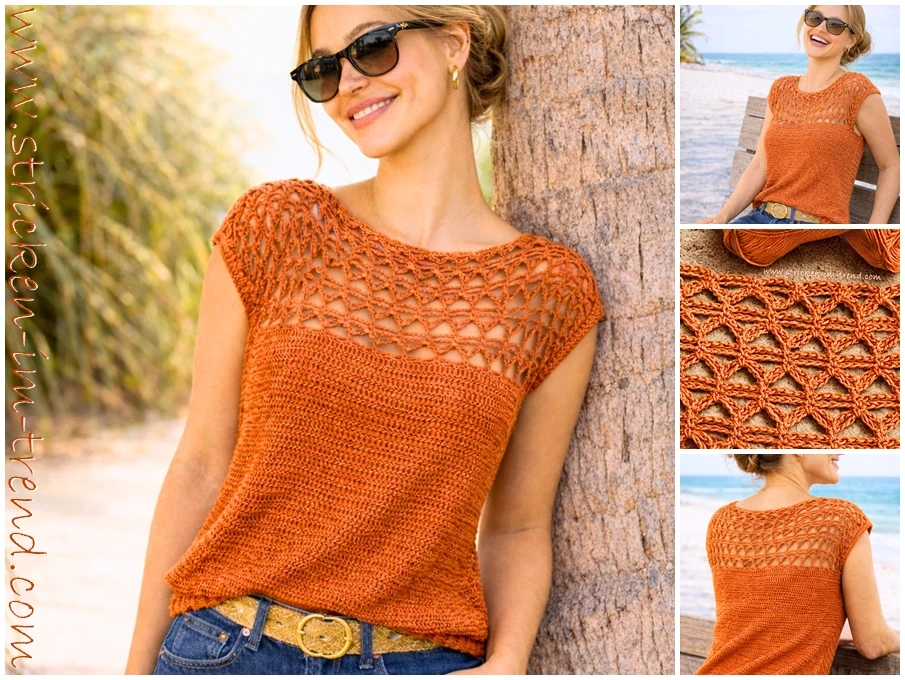
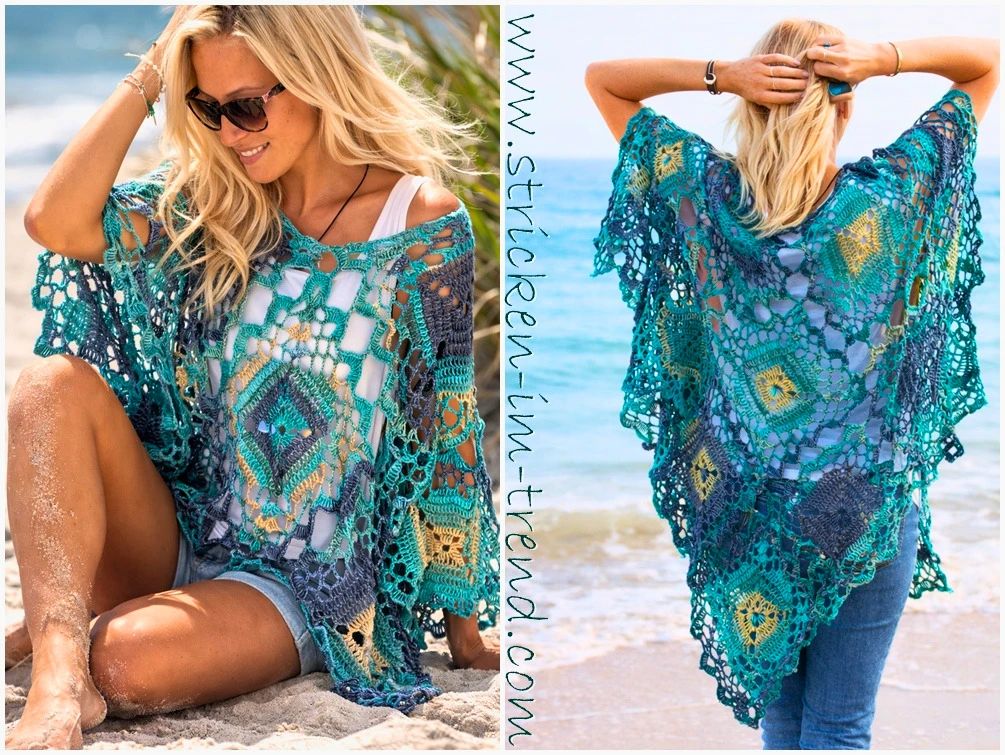
Popular patterns from stricken-im-trend.com
Maybe your next project is already here –
discover some popular designs from the stricken-im-trend collection.
Style knows no Size.
An initiative by Kathrin Parlatan | stricken-im-trend.com