
Provisional Cast-On in Knitting – When You Really Need It and Why It’s So Practical

There are knitting techniques that sound more complicated the first time you hear about them than they actually are.
The provisional cast-on clearly belongs in that category.
Many knitters come across the term in a pattern and immediately wonder: Do I really need this?
That is a completely fair question.
Because not every project requires this technique. For many simple knits, a regular cast-on works perfectly well.
But the moment you want to stay flexible, build something neatly, or adjust a project later, the provisional cast-on suddenly becomes incredibly interesting.
It is not a technique for showing off.
It can be a technique for thoughtful knitting.
What Is a Provisional Cast-On?
A provisional cast-on is a temporary cast-on where the starting stitches can later be released and picked up again.
Instead of creating a fixed edge, the stitches stay "live".
That means:
you can knit in the opposite direction later
you can add ribbing or borders afterward
you can add length
you can work symmetrically
you stay flexible in construction
A regular cast-on closes the beginning.
A provisional cast-on keeps it open.
And that is exactly where its strength lies.
Why Use It at All?
Many beginners quite reasonably think:
Why not just cast on normally?
The honest answer:
For many projects, you absolutely can.
But for some projects, a provisional cast-on is much more elegant, practical, or simply the best solution.
1. When You Want to Knit More Later
A top feels too short. A sweater still needs ribbing. A hem should be longer.
With a regular cast-on: often awkward.
With a provisional cast-on: cleanly solvable.
2. When Both Sides Should Look the Same
Very useful for scarves, shawls, or stoles.
You start in the middle and work in both directions later.
3. When Fit Is Only Clear Later
Especially with collars or necklines, you often only know what works once you try it on.
4. When You Want to Construct More Professionally
Many modern designs intentionally work with open options instead of fixed decisions.
5. When You Want to Keep Your Options Open
And in knitting, that is often smarter than people think.
Which Projects Benefit Most?
Very Useful For:
- scarves with two identical ends
- shawls with symmetrical construction
- collars and neckbands
- tops with adjustable length
- sweaters with later hems
- ribbing to be added afterward
- design projects and self-drafted garments
Less Necessary For:
- simple dishcloths
- classic hats
- basic scarves without symmetry
- projects with no later adjustments
And yes, that is worth saying honestly too.
How Does It Work Technically?
The basic idea is simple:
You first use waste yarn or a temporary structure to hold the stitches.
Later, that waste yarn is removed and the live stitches are revealed. You place them onto a needle and continue knitting.
What sounds theoretical is often surprisingly logical in practice.
The Most Important Methods
1. Crochet Chain Method with Waste Yarn
The best-known and often most comfortable method.
You crochet a loose chain using smooth waste yarn. Then you pick up the required knitting stitches through the back bumps of the chain.
Later, the chain is unraveled.
Advantages:
- very neat
- easy to control
- easy to remove
- ideal beginner method
- stitch count easy to manage
My Advice:
For beginners, usually the best choice.
2. Direct Waste Yarn Cast-On
Here you cast on directly with waste yarn and then continue knitting with the main yarn.
Later, the waste yarn is removed (sometimes cut).
Advantages:
- quick
- uncomplicated
- little preparation
Disadvantages:
- a bit messier
- picking up stitches can be trickier
3. Waste Yarn Rows Method
First, a few rows are worked in waste yarn, then the real project begins with the main yarn.
Later, the waste rows are unraveled.
Advantages:
- very stable
- easy to see
- comfortable for larger projects
How to Pick Up the Stitches Properly Later
This is where most mistakes happen.
Important:
- Pick up first, then remove the yarn
- Watch stitch orientation: the front leg should sit correctly on the needle
- Correct twisted stitches individually
- Work the first row loosely: edges often hold tension after pickup
Patterns Make a Huge Difference
One point that is often underestimated:
A provisional cast-on is technically possible with almost every pattern—but not equally pleasant in every one.
Very Suitable:
- stockinette stitch
- garter stitch
- simple ribbing
- basic textured stitches
Why?
Because later the stitches are easy to identify and continue cleanly.
More Challenging:
- lace patterns
- eyelet patterns with repeats
- cables
- asymmetrical textures
- patterns with increases or decreases directly at the edge
Here you need more experience.
Because you do not only have to pick up stitches—you also need to continue the pattern logically.
And that is the real art.
Questions to Ask Before Starting a Pattern
1. Where does the repeat begin later?
- If knitting in the opposite direction, the pattern must flow correctly.
2. Are there edge increases or decreases?
- That makes things more advanced.
3. Does the wrong side matter?
- Very important for scarves and shawls.
4. Can I count the pattern easily?
- If not: test first.
Common Mistakes – and How to Avoid Them
The good news:
Almost all typical problems are easy to prevent once you know them.
And even more reassuring:
If the first attempt goes wrong, it usually has nothing to do with talent.
Just small setup details.
Worked Too Tight
A classic issue.
If the waste yarn or cast-on edge is too tight, the stitches are difficult to release or pick up cleanly.
➡️ Cast on a little looser and keep the first row relaxed.
Using Fluffy Waste Yarn
Mohair, bouclé, brushed yarns, or sticky fibers are usually not ideal.
They catch in the main yarn and make opening harder.
➡️ Smooth cotton yarn is usually perfect.
No Contrast Colour
If waste yarn and main yarn look too similar, it becomes harder to see:
- which stitch belongs where
- where to open
- which strands matter
➡️ Always choose strong contrast when possible.
Opening the Wrong End
Especially important with the crochet chain method.
One side usually unravels beautifully.
The other often does not.
➡️ Mark the opening end immediately.
Not Thinking About the Pattern Ahead
Stockinette is forgiving.
Lace, cables, or repeats are not.
➡️ Make a swatch first or plan the repeat carefully.
Removing Too Early
Some people unravel everything first and then try to rescue the live stitches.
Stressful and unnecessary.
➡️ Pick up stitch by stitch first, then remove the waste yarn fully.
My Personal Tip
Do not test this technique on your favourite project first.
Make a small swatch:
- cast on 20 stitches
- knit a few rows
- open it
- pick up stitches
- continue knitting
After that, the technique loses its mystery quickly.
Designer Insight: Why I Love Techniques Like This
When designing, many things only become clear while knitting.
Paper is patient. Projects are honest.
A provisional cast-on allows:
- better proportions
- cleaner edges
- later refinements
- more elegant solutions
And that often makes the difference between:
it kind of fits and it fits beautifully
Is a Provisional Cast-On Difficult?
No.
New? Yes.
Unfamiliar? Maybe.
Difficult? Not really.
Many knitters need one try—and suddenly it all makes sense.
🧡 My Conclusion
The provisional cast-on is not a technique for specialists.
It is a technique for anyone who wants more options while knitting.
And honestly: The longer you knit, the more you appreciate these quiet, clever little solutions.
💬 Do you already use the provisional cast-on regularly—or have you successfully kept your distance so far?
Feel free to tell me. 💛
#strickenimtrend #maschenmitliebe #knittingtechniques #learnknitting #provisionalcaston
I hope I helped bring this technique a little closer today—and maybe next time the right project appears, you will reach for it naturally.
All my love,
Kathrin 🌸
❓ Frequently Asked Questions About the Provisional Cast-On (FAQ)
When people try the provisional cast-on for the first time, very similar questions usually come up.
That is completely normal.
Because in theory, it often sounds more complicated than it really is. Once you understand the basic principle, it usually becomes surprisingly logical.
Here are the most common questions—clearly answered and without unnecessary jargon.
1. What is a provisional cast-on in knitting?
A provisional cast-on is a temporary cast-on where the starting stitches can later be opened and placed back onto a needle.
That means you can knit in the opposite direction later or add ribbing, borders, length, or other finishing details afterward.
Unlike a regular cast-on, the beginning stays flexible.
2. When is a provisional cast-on worth using?
It is especially useful whenever you want to keep your options open at the beginning of a project.
For example:
- scarves with two matching ends
- collars adjusted later
- tops or sweaters that may need more length
- ribbing added afterward
- symmetrical shawls
- self-designed garments
For very simple projects with no later changes, it is often not necessary.
3. Is a provisional cast-on beginner-friendly?
Yes, absolutely.
The key is not starting with a large complicated project.
A small swatch with 20 stitches is often enough to understand the method. Once you try it once, it usually feels much easier than expected.
The crochet-chain method is often the most beginner-friendly option.
4. Which method is easiest?
For many knitters, the crochet chain method with waste yarn is the easiest and clearest.
It is neat, controlled, and usually easy to open later.
More experienced knitters may also enjoy direct waste-yarn methods, but for beginners the crochet chain is often the most relaxed start.
5. Does it work with every stitch pattern?
Technically yes—but not every pattern is equally comfortable.
It works especially well with:
- stockinette stitch
- garter stitch
- simple ribbing
More advanced patterns like lace, cables, or complex repeats require more planning because the stitch pattern must continue correctly after picking up the stitches.
6. What yarn should I use as waste yarn?
Smooth, stable yarns work best.
Cotton yarn in a contrasting colour is a favourite choice.
Less ideal are fluffy yarns like mohair, bouclé, or sticky fibers, because they can make opening the cast-on much harder later.
7. Do I really need to learn this technique?
Not necessarily.
You can knit many beautiful projects your whole life without ever using it.
But once you understand it, it becomes one of those very practical tools that can solve specific problems beautifully.
So it is less about "must learn" and more about "good to have."
8. What if I picked up the stitches twisted?
Do not panic.
That happens even to experienced knitters.
Twisted stitches can usually be corrected while picking them up or easily fixed in the next row.
It is a normal part of learning—not a disaster.
9. Can I use it to lengthen a finished project?
Yes, absolutely. Towels, foam mats, or any flat surface can work perfectly well. What matters is not the equipment, but how carefully you control shape and tension.
10. Why do designers use provisional cast-ons so often?
Because fit and proportion often become clearer while knitting.
A provisional cast-on keeps options open for later decisions—such as length, collars, hems, or transitions.
And that flexibility often turns a good project into a truly polished one.
Would you like to dive even deeper into my world of stitches?
Discover my patterns, browse the blog or join the community!
Popular patterns from stricken-im-trend.com
Maybe your next project is already here –
discover some popular designs from the stricken-im-trend collection.
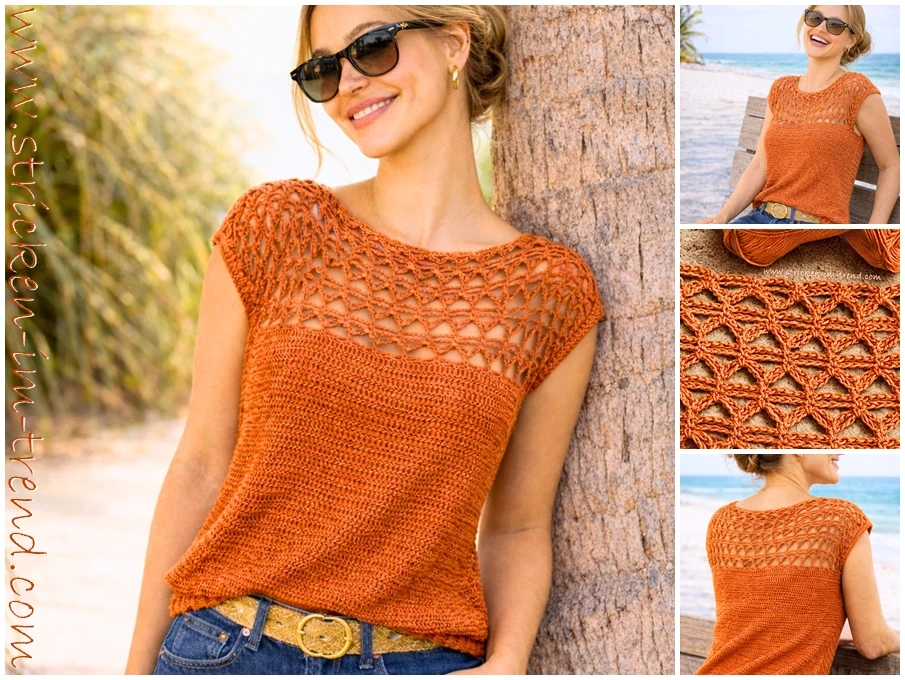
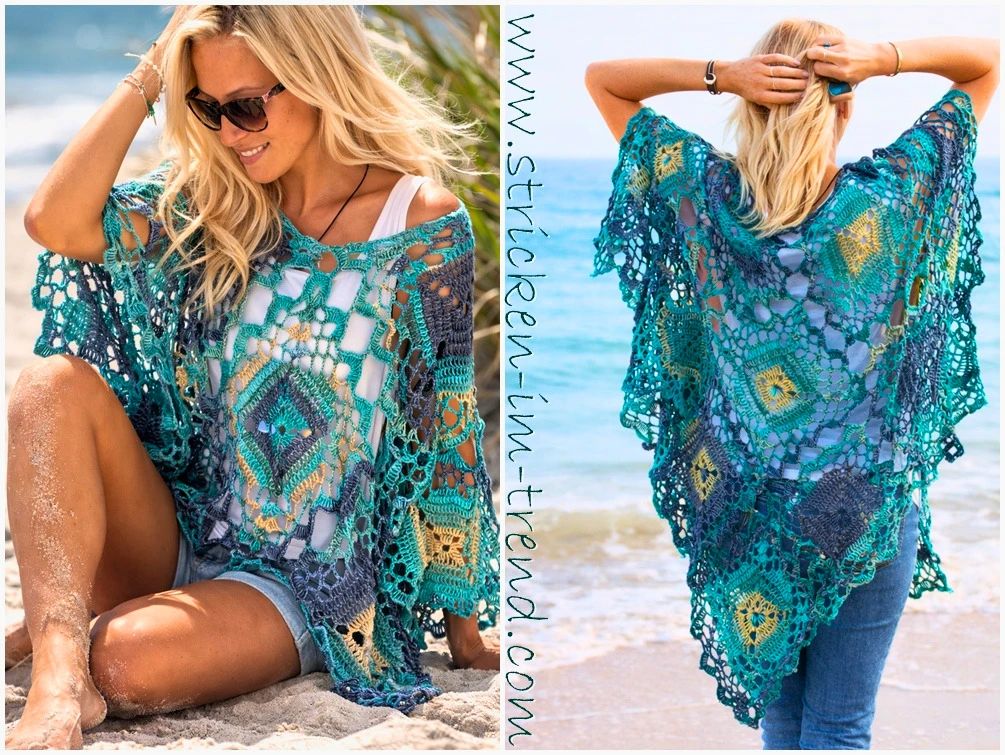
Style knows no Size.
An initiative by Kathrin Parlatan | stricken-im-trend.com