
Understanding Knitting & Crochet Patterns: From Charts to Social Media – Why the Same Pattern Can Be Experienced So Differently

The world of knitting and crochet has changed dramatically over the past few years.
And I don't just mean:
- trends
- colors
- yarns
- or garment styles.
What has changed even more is the way we learn, create, read patterns, and consume creative content.
Anyone who has spent time on platforms like CrazyPatterns — whether as a customer or a designer — has probably noticed this shift already.
Over the past months, I have found myself thinking about it again and again.
Not only while writing new patterns, but also during conversations with customers, while reading reviews, and through discussions within the crafting community.
Because one thing becomes apparent quite often:
The very same pattern can be experienced completely differently by different people — even when everyone is looking at the exact same instructions, knitting chart, or crochet chart.
This observation made me take a closer look.
Patterns look different today.
Questions have changed.
Reviews often feel more personal and emotional.
And at the same time, expectations toward digital content have increased significantly.
Personally, I find this development fascinating.
It shows just how much the fiber arts world has adapted to our digital age.
And that's exactly what I'd like to talk about today.
Quick Overview
In this article, you’ll discover:
✓ How knitting and crochet patterns have changed over the years
✓ Why the same pattern can be experienced very differently by different makers
✓ How social media, tutorials, and digital learning habits influence expectations
✓ Why reviews often reflect more than just the pattern itself
✓ What challenges modern craft platforms such as CrazyPatterns face today
✓ Why the best pattern does not look the same for everyone 💛

About the Author
Kathrin Parlatan
Patterns Used to Be More Technical
Anyone who learned to knit or crochet ten, fifteen, or even thirty years ago will probably remember this quite well.
Back then, many patterns were:
more compact
more technical
based heavily on pattern repeats
and presented in a much more straightforward way
Crafters worked with:
knitting charts
crochet charts
pattern repeats
abbreviations
schematics
and relatively little additional explanation
And that was completely normal.
Nobody expected:
twenty detailed photos
video tutorials
step-by-step markers
or visual guides on every page
Many knitters and crocheters were simply used to actively working their way through a pattern and interpreting the information provided.

Many experienced knitters and crocheters still prefer working exactly this way today.
They appreciate:
✨ compact information
✨ clear technical structures
✨ working with pattern repeats
✨ minimal repetition
✨ short and precise instructions
And it works extremely well.
At the Same Time, Digital Learning Has Changed
Of course, the world beyond knitting and crochet has evolved as well.
Today, many people learn creative skills through:
YouTube
Reels
TikTok
Pinterest
short-form videos
tutorials
visual step-by-step content
Digital content has become:
faster
more visual
more emotional
more interactive
and more guided
Naturally, this also influences what people expect from knitting and crochet patterns.
Many crafters now appreciate:
📍 more guidance
📍 stronger visual support
📍 more modern layouts
📍 clearly separated sections
📍 additional intermediate steps
📍 helpful notes throughout the project

And my point of view:
I don't think that's a bad thing.
After all, crafting should be enjoyable.
It should be relaxing.
It should be motivating.
And naturally, many people appreciate being guided through a project in a clear and comfortable way.
The Challenge of Modern Patterns
And this is where the real challenge begins.
Today, a single pattern often has to meet a wide variety of needs at the same time.
For example:
beginners and experienced crafters
visual learners and technically minded knitters or crocheters
people who enjoy improvising
and those who prefer detailed guidance every step of the way
That's not an easy balance to achieve.
What feels "perfectly structured" to one person may seem:
too compact
too detailed
too technical
or overly explanatory
to someone else.
And that is exactly why reviews can sometimes differ dramatically — even when people are working from the very same pattern.
"Easy to Understand" Is Often Personal
This may be one of the most interesting aspects of all.
Words such as:
"easy to understand"
"well organized"
"confusing"
"clearly explained"
sound objective at first.
In reality, however, they are often closely connected to an individual's preferred learning style.
Some people love working with:
knitting charts
crochet charts
pattern repeats
concise technical instructions
Others prefer:
detailed step-by-step explanations
additional written guidance
photographs
extra visual support
And both approaches are completely valid.
That's why I believe there is no such thing as the one perfect pattern for everyone.
Instead, there are different styles that work better for different types of makers.
Even Terminology Changes Over Time
Another interesting aspect is the language itself.
Many traditional technical terms are still perfectly correct today — but they may be interpreted differently than they were in the past.
A good example is knitting charts and pattern repeat presentations.
If a pattern says:
"Chart excerpt"
what it usually means from a technical perspective is:
The complete pattern repeat is shown.
It does not mean:
The pattern is incomplete.
Especially when multiple sizes are included, designers often use chart excerpts that display the full repeat rather than creating enormous charts for the entire garment.
For experienced knitters, this is completely normal.
For others, it may feel unfamiliar at first.
And this illustrates something important:
It's not only patterns that are changing.
The way we interpret information is evolving as well.
Reviews Have Become More Emotional
Another aspect I find particularly interesting is this:
Reviews on digital platforms often feel more personal and emotional today than they did in the past.
And this certainly isn't limited to the knitting and crochet world.
In general, we tend to leave reviews today:
more quickly
more spontaneously
more immediately
and often based more strongly on our personal experience
When it comes to creative projects, our emotional experience plays an important role as well.
After all, a knitting or crochet project often accompanies us for:
hours
days
sometimes even weeks
When a project creates a particularly enjoyable sense of flow, we naturally associate those positive feelings with the pattern.
And when a project feels more challenging than expected, that can sometimes influence our perception as well.
That's completely human.
What This Means for Platforms Like CrazyPatterns
This development becomes especially visible on platforms such as CrazyPatterns.
Every day, people with very different backgrounds come together there:
beginners and experts
different generations
traditional crafting styles and modern social media habits
technically oriented knitters and visual learners
designers, testers, and customers

Everyone uses the same platform — but everyone brings different experiences, expectations, and ways of working.
As a result, different perceptions of the very same pattern are almost inevitable.
And this is often reflected in reviews.
What feels logical, compact, and pleasantly structured to one person may seem too technical or not detailed enough to someone else.
That is why I believe reviews should always be viewed as part of a bigger picture.
Because a single experience rarely tells the whole story.
Especially in a diverse community like ours, reviews often reflect more than just the quality of a pattern. They also reflect different learning styles, expectations, and approaches. Only when many experiences come together does a truly meaningful overall picture emerge.
At the same time, reviews are incredibly important.
They help:
⭐ communicate expectations more clearly
⭐ improve layouts
⭐ clarify terminology
⭐ consider different learning and viewing preferences
⭐ identify strengths and weaknesses from the community's perspective
Reviews do not only help other customers make decisions.
They also provide designers with valuable insights into the experiences and expectations of the community. Many improvements to layouts, wording, and additional explanations ultimately grow out of this kind of feedback.
Of course, not every comment will be interpreted the same way, and not every suggestion can or should be implemented. But feedback often creates new perspectives that help make patterns clearer and more accessible.
What I find equally interesting is that not only patterns and user habits are changing — the platforms themselves are evolving as well.
Over the years, CrazyPatterns has continuously updated, expanded, and modernized its features.

Recently, for example, the way reviews are displayed was redesigned. Customers can now see much more quickly how an overall rating is composed and how other users experienced a particular product.
This, too, is ultimately a response to changing user habits.
Because the demands placed on digital platforms continue to grow:
information should be easier to scan
reviews should be more transparent
navigation should be simpler
while the diversity of the community should be preserved
That is not an easy task.
Platforms like CrazyPatterns now operate at the intersection of crafting, community, e-commerce, digital learning, and social interaction.
And that may be one of the greatest challenges facing modern crafting platforms today:
Finding the right balance between technical clarity, creative freedom, different learning styles, and a pleasant user experience.
There is probably no simple solution.
But perhaps this diversity is one of the reasons why platforms like CrazyPatterns remain so vibrant after all these years.
Because in the end, they are not built solely on patterns or products.
They are built on people.
Their experiences.
Their knowledge.
Their projects.
Their questions.
Their reviews.
And their willingness to share and connect with one another.
I also made the dress in size XL.
And here too, you can clearly see:
The construction stays the same,
but the overall effect changes.
Depending on body shape, posture, and movement, the exact same design can look completely different.
And that's not a disadvantage —
it's part of the beauty of it.
Designers Are Learning Too
What many people may not realize is this:Designers often reflect on reviews very carefully.
Behind every pattern are usually:
many hours of work
sketches and ideas
calculations
test projects
technical revisions
photography
layout work
translations
and a great deal of passion
Naturally, feedback often leads to questions such as:
"Could I explain this more clearly?""Would this section benefit from additional guidance?"
"How differently do people read and interpret patterns today?"
Over the years, I have adjusted wording, refined layouts, and added extra explanations because feedback from the community has shown me new perspectives I might not have considered otherwise.
And I believe this kind of reflection has become just as much a part of the creative process today as designing the pattern itself.
🤝 My Personal Conclusion
The longer I spend time in the knitting and crochet world, the more I believe this:
The best pattern is not automatically the one with the most photos, the most colors, or the most pages.
The best pattern is the one that fits the way you like to work.
Because we all learn differently, work differently, and experience projects differently. What feels perfectly structured to one person may seem too detailed or too technical to someone else. And that is exactly what makes our fiber arts community so diverse.
At the same time, I find the developments of recent years incredibly fascinating.
Knitting and crochet are no longer just traditional crafts. Today, they exist at the intersection of technology, creativity, community, social media, visual culture, and digital learning.
As a result, patterns, questions, expectations, reviews, and even the way we communicate with one another continue to evolve.
I don't believe that this is a bad thing.
Quite the opposite. It shows just how vibrant, diverse, and alive our community has become.
❤️ Perhaps we simply need to learn to understand these changes a little better — both as customers and as designers.
And perhaps, when reviewing, commenting, or discussing a pattern, we can occasionally pause for a moment and remember:
Behind every pattern is a real person.
Someone who has calculated, tested, revised, started over, photographed, written, edited, and often invested many hours — sometimes even weeks — into a project.
Someone with experience. With passion. And usually with quite a lot of coffee. ☕
💬 What do you think?
Do you feel that knitting and crochet patterns have changed over the past few years?
And how do you personally prefer to work?
✔️ compact and technical
✔️ step-by-step instructions
✔️ knitting or crochet charts
✔️ lots of photos
✔️ short and concise patterns
✔️ or highly detailed explanations
⭐ And one question interests me especially:
What role do reviews play for you?
Do you read reviews before purchasing a pattern?
Do you regularly write reviews yourself?
And what do you pay attention to most when reading them?
I'd love to hear your thoughts in my Facebook group.
#strickenimtrend #maschenmitliebe #reviews #crochet #knitting #crazypatterns
Because in the end, we are all connected by the same joy:
Creating something uniquely our own, one stitch at a time.
All my love,
Kathrin 🌸
Would you like to dive deeper into my world of stitches?
Discover my patterns on CrazyPatterns , browse the blog or become part of the community !
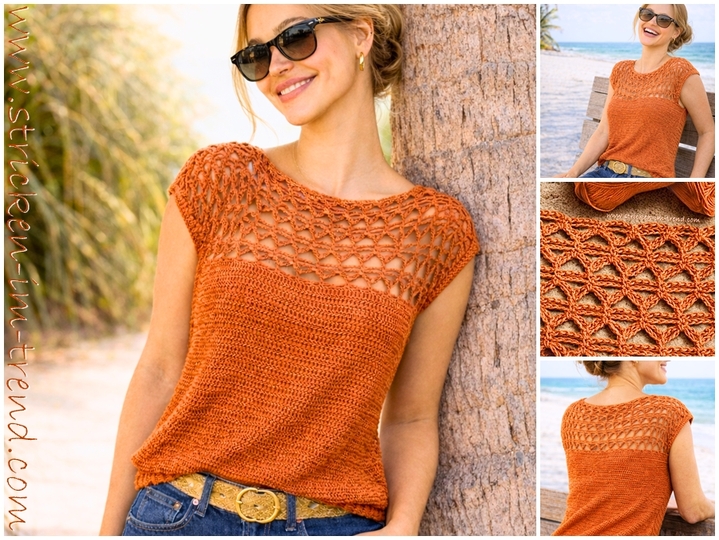
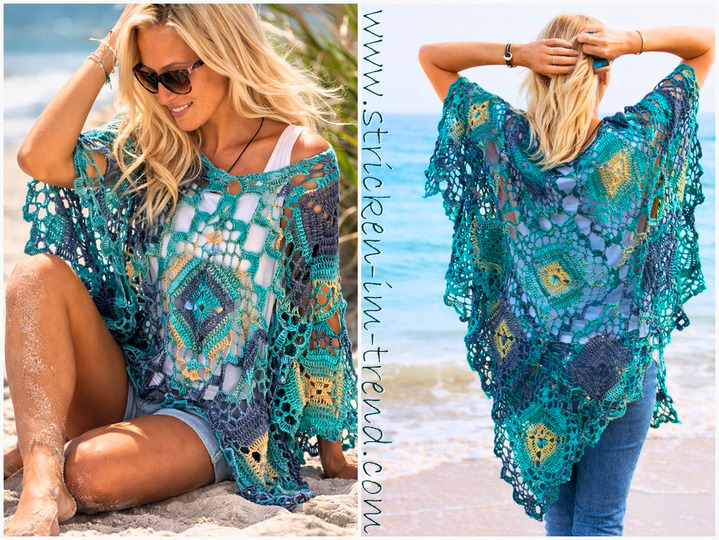
Style knows no size.
An initiative by Kathrin Parlatan | stricken-im-trend.com
Advertising note: This article contains advertising and links to CrazyPatterns .