
Why Your Project Might Look Different Than the Product Photo – And What’s Really Behind It

Maybe you know this feeling…
You see a beautiful knitted or crocheted dress, top, or shawl – perfectly staged, with soft lighting, flowing movement, and exactly that one moment where everything simply fits...
… and then you sit there with your own project and think:
"Why does mine look different?"
The short answer?
Because it always looks different.
The long answer is far more interesting.
Quick Overview
In this article, you’ll discover:
✓ Why a product photo always captures only one single moment
✓ How lighting, perspective, movement, and styling change the effect of a design
✓ Why AI is currently such a polarizing topic – and why I personally see it as a tool
✓ What really happens behind professional product photos
✓ How differently the exact same pattern can look depending on presentation
✓ What you should really pay attention to as a customer today 💛
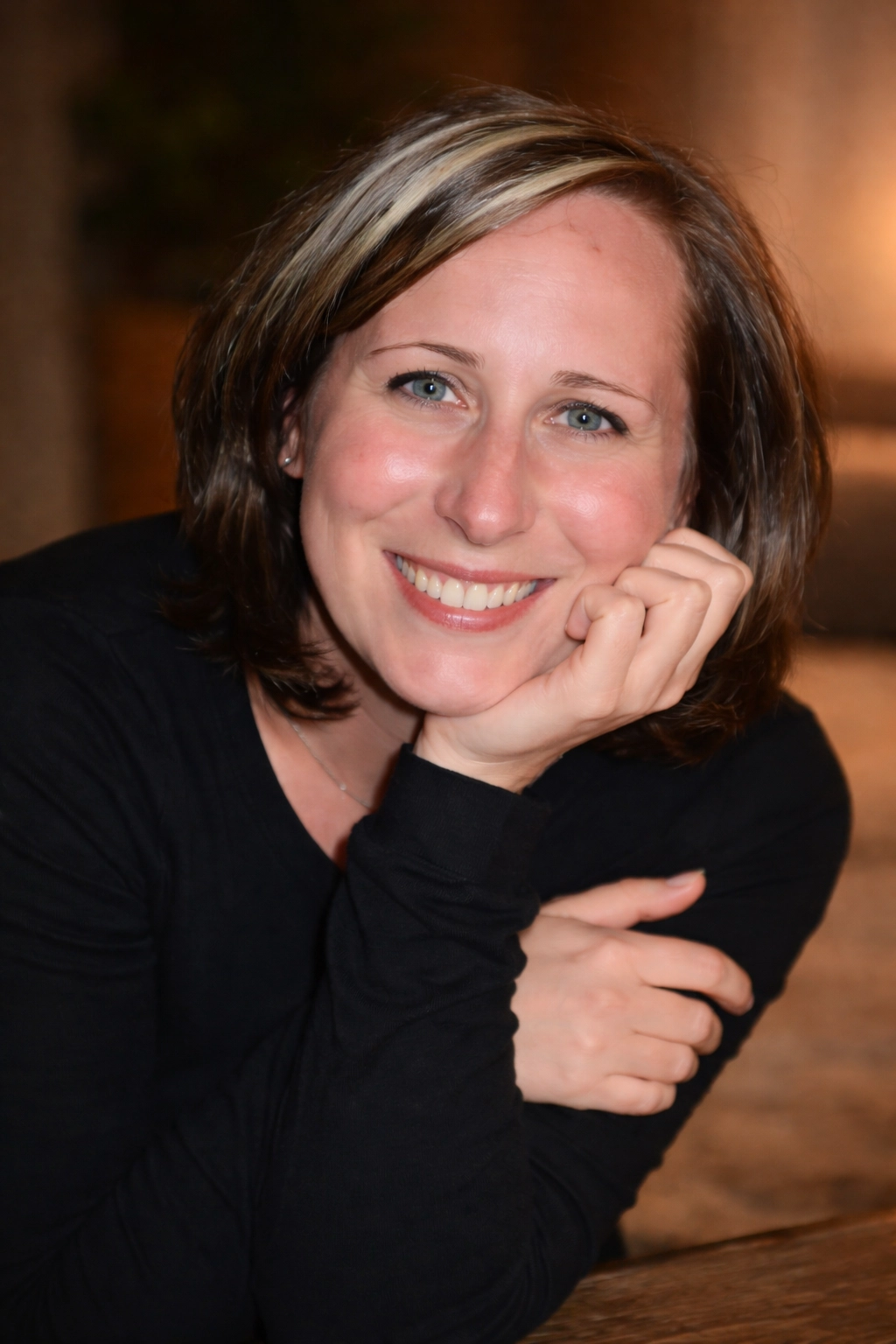
About the Author
Kathrin Parlatan
A Product Photo Is a Moment – Not a Permanent State
A photo never shows "reality."
It shows one very specific moment.
- The lighting is carefully chosen
- The movement is captured
- The fabric falls perfectly in that exact second
- The pose is not accidental
What you see is not just the dress itself –
but the interaction of:
✦ lighting
✦ movement
✦ body
✦ perspective
✦ styling
And that's exactly why your finished piece can never look completely identical.
But honestly?
That's actually a good thing.
Movement Changes Everything
A dress is alive.
It falls differently when you walk.
It looks different when you sit.
It changes with every step, every turn, every tiny movement.
A photo freezes exactly one of those moments.
Real life gives you thousands of them.
Every Body Is Different – And That's Not a Problem, That's the Point
A design is not a rigid object.
It adapts to:
- your size
- your proportions
- your posture
- your movement
And this is exactly where the difference happens.
What looks slim and stretched on one model may appear softer or completely different on you.
👉 That's not a mistake – that's individuality.
Behind the Scenes – What You Don't See in the Photos
What many people don't realize:
A product photo rarely just "happens" — at least not for me.
There is often so much more behind it than you'll ever see in the final image.

✦
The dress gets adjusted.
✦
Wrinkles are smoothed out.
✦
The fit is corrected.
✦
Dozens of photos are taken — and in the end, that one single moment is selected where suddenly everything looks perfect.
Sometimes it's only tiny details:
- a minimal step,
- a small turn,
- or a slightly different angle…
And suddenly the whole design feels completely different.
Sometimes I'm a bit of a perfectionist about it. 😄
- I probably move flower pots around 18 times.
- I keep rearranging accessories while noticing the amused looks from my lovely models...
- I adjust dresses.
- I twist fabric edges millimeter by millimeter until the drape feels just right to me.
And many things happen completely spontaneously.

For example, during one shoot, the shoes we originally brought suddenly didn't work with the dress at all.
Luckily, both models had the same shoe size.
So shoes, jewelry, and even watches were quickly swapped between them.
Improvisation is often just as important as the actual photography itself.
And later on, of course, you no longer see any of those little details in the finished image.
But they are still part of the story behind the photo.
AI, Expectations – And Why Everything Is Changing Right Now
If we talk about why a project sometimes looks different from the product photo, there's one topic we can't avoid:
Artificial Intelligence.
And honestly?
I understand both sides.
A Look Back – And Why None of This Is Actually New
If you step back for a moment, you quickly realize:
What we are experiencing right now is not an exception.
Throughout history, new developments have almost always been viewed critically at first.
People who understood herbs and natural medicine during the Middle Ages were often considered dangerous — today we pay a lot of money for that same knowledge at pharmacies.
New tools were often seen as "tricks," "deception," or even threats.
And only over time did people realize:
👉 It's not about the tool itself — it's about how you use it.
⚖️ Two Sides – Like Every New Development
And that's exactly where we are again today.
AI, like every new technology, has two directions:
Some people use it thoughtfully as support.
Others use it to take shortcuts.
It was the same with Photoshop.
It was the same with digital pattern software.
And now it's no different with AI.
My Perspective as a Designer
Of course, I can only speak for myself.
For me, AI is a tool.
Nothing more — but also nothing less.
- I crocheted the dress myself
- I developed the pattern myself
- The experience behind it is real
What AI sometimes helps me with are things like:
- smoothing wording
- structuring ideas
- speeding up processes
But it does not replace:
- my work
- my experience
- my feeling for design
And...
You can tell the difference.
The Customer Perspective – And Why It's Completely Valid
On the other side, there's the customer perspective.
And that matters just as much.
Because yes — today it has become harder to immediately recognize:
- What is real?
- What is optimized?
- What is staged?
That uncertainty is understandable.
And that's exactly why we need more than ever today:
- transparency
- trust
- and a little thoughtful understanding from both sides
🔍 A Small Reality Check
A good clue as a buyer can be looking at things like:
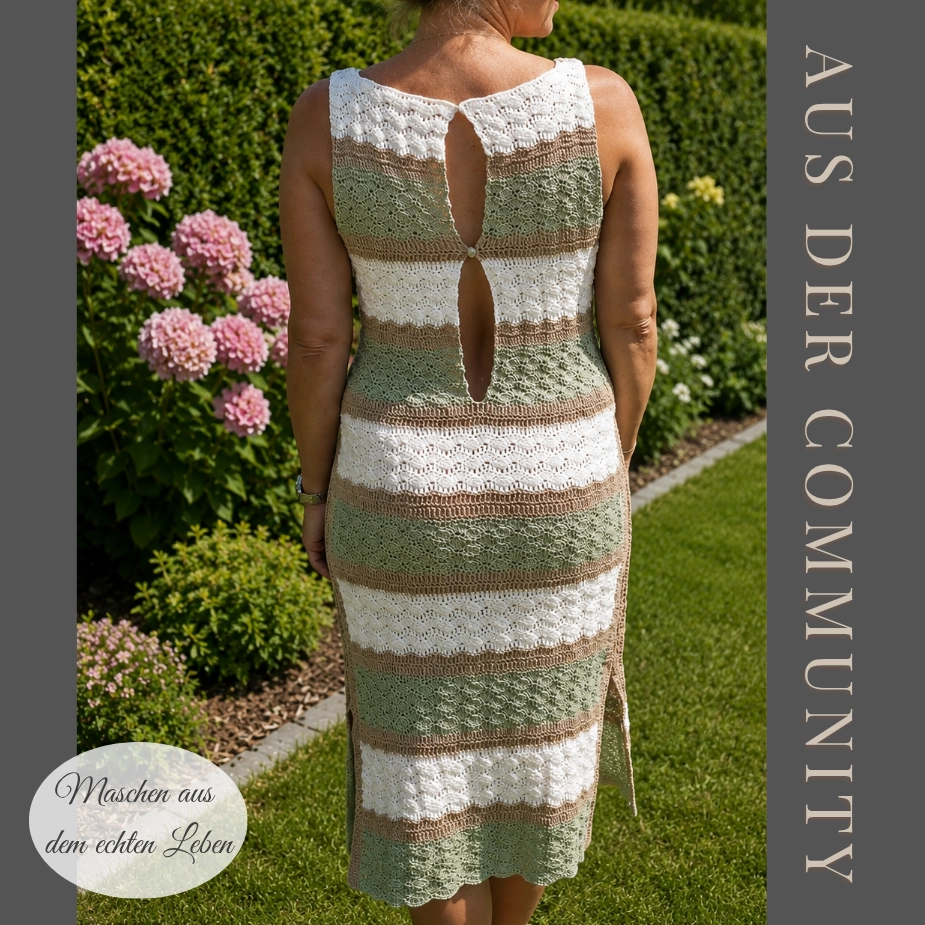
How did the designer work in the past?
Can you see development over time?
Do the photos feel consistent?
Are there customer reference photos?
Are there already reviews?
Because someone who worked carefully years ago usually still does today — just with better tools.
Higher Expectations – An Often Overlooked Point
What we often forget:
Not only have the tools changed.
👉 Our expectations have changed too.
And dramatically.
Today we expect:
- perfect photos
- perfect presentation
- instant impact
At the same time, we become suspicious when something looks "too perfect."
A photo is too simple? → "People can do better nowadays."
A photo is too polished? → "That can't possibly be real."
A little absurd, isn't it?
And exactly within this tension, we're all moving right now.
🤝 The Important Part: Changing Perspectives
What do I personally wish for?
That we slowly develop a little more understanding for each other again.
👉 Designers who show more transparently what's behind the photos
👉 Customers who are willing to look a little closer
Because in the end, it's not about perfection.
It's about whether the product actually works.
💛 And That's Exactly Why This Matters to Me
As long as what you finally hold in your hands truly exists...
…as long as it can be worn, used, and experienced...
→ then it becomes secondary whether the photo was taken in a real setting
→ or optimized with modern tools
What truly matters is:
The product itself has to be good.
And a Word About Platforms Like CrazyPatterns
Platforms also have to deal with this development.
And honestly, I think CrazyPatterns handles it in a very practical and realistic way.
The guidelines are clear — but not disconnected from reality.
Because they still allow what truly matters:
✨ real products
✨ real patterns
✨ and a fair approach to modern tools
And from my perspective, that's exactly the right direction.
If I'm completely honest, I already had photos many years ago where I personally thought:
"These almost looked too good compared to others."
If AI had already existed back then, they probably would have been questioned in exactly the same way.
And honestly, that shows something very clearly:
Not only are the tools changing —
our perception of what feels "real" is changing too.
A Concrete Example – How the Exact Same Design Can Look Completely Different
So this doesn't remain just theory, I'd like to show you a very specific example.
A summer dress from my shop — the SERENZA crochet dress, worked in several different versions.
And honestly, it demonstrates this entire topic surprisingly well.

The First Version – The Original
The original version of the dress was photographed quite some time ago.
- worn in a natural setting
- less staged
- authentic, but not yet edited to today's visual standards
A beautiful image — just different from what we often expect today.
New Versions – Same Pattern, Different Effect
As part of the relaunch, I crocheted the dress again… well, actually three more times. 😄

And this time, I intentionally changed certain things:
- a slightly adjusted length and a shorter back slit (simply because trends evolve)
- new color variations & materials
- different presentation
- more modern image styling
And suddenly, the exact same design appeared…
✨ more elegant
✨ clearer
✨ more modern
Without the actual foundation really changing at all.
🌈 Colors Are Never Just Colors
One point that's often underestimated — and something I intentionally want to mention here:
Colors look different in photos than they do in real life.
There are many reasons for that:
- lighting (warm, cool, direct, soft)
- camera settings
- contrast and editing
- environment (backgrounds, reflections)
A turquoise shade may appear calm and muted in a photo —
and much more vibrant in reality.
Or the other way around.
Different Sizes – Same Construction

I also made the dress in size XL.
And here too, you can clearly see:
The construction stays the same,
but the overall effect changes.
Depending on body shape, posture, and movement, the exact same design can look completely different.
And that's not a disadvantage —
it's part of the beauty of it.
The Real Difference
When you see all versions side by side, one thing becomes very obvious:
The product itself hasn't fundamentally changed.
It's the presentation.
It's the tools.
It's the perspective on the whole picture.
And that's exactly where that moment often happens where people think:
"That looks completely different."
And That's Exactly the Point
The dress exists.
The pattern works.
The result is real.

What changed is simply the way we present it.
And that's exactly why it's so important to keep this in mind — whether you're a customer or a designer.
My testers and I crocheted this dress multiple times — in different colors, lengths, materials, and sizes.
And every single time, it looked different, even though it was always the same design.
❓ What You Can Pay Attention To
Before we finish, I'd like to leave you with a few thoughts.
Not as strict rules — just as a small guide.
Because especially today, when images are becoming faster, sharper, and more polished than ever, it's not always easy to judge things correctly.
Maybe these points help you develop a better feeling for what really matters.
1. How can I tell if a product photo is realistic?
Pay attention to details:
- Are there multiple perspectives (movement, sitting, close-ups)?
- Does the material feel believable (stitch texture, drape)?
- Are there also less "perfect" images?
- Do customer photos exist?
One single perfect image says very little.
Multiple perspectives tell the real story.
2. Can a photo be both real and optimized?
Yes — and today, that's completely normal.
A photo can be:
- well lit
- lightly edited
- carefully staged
…and still show a completely real product.
👉 Optimization does not automatically mean deception.
3. Should I be skeptical when something looks "too good"?
A healthy amount of critical thinking never hurts — but:
"Well done" does not automatically mean "fake."
Many designers have improved over years —
with better cameras, better tools, and more experience.
Sometimes a photo simply looks good because a lot of work went into it.
4. What can I use as orientation as a buyer?
It helps to look at the bigger picture:
- Does the designer have a recognizable style?
- Are there older works to compare?
- Does the presentation feel consistent?
- Can I find reviews and ratings?
Trust usually develops over time — not through a single image.
5. And what if my result looks different?
Then that's completely normal.
Your project is influenced by:
- your yarn
- your hook or needles
- your tension / crafting style / even your mood that day
- your blocking method
- your size
- your movement …
It's not "wrong" — it's your version.
🌿 My Personal Conclusion
Maybe your project looks different from the product photo.
But maybe that's exactly the moment where it truly starts becoming yours.
Not perfect.
Not identical.
But real.
And before I finish, there's one more thing that's very important to me:
I can only speak for myself — for the way I work and my personal approach to this topic.
I write my own patterns.
I knit and crochet my own designs — often multiple times while developing them.
I test, discard, adapt, and improve.
And that will never change.
Not because it "has to" —
but because this passion is exactly why I do this at all.
Tools are allowed to evolve.
They're allowed to make processes easier, support creativity, and help us grow.
But the core of my work stays the same.
And I truly believe that this is what matters in the end.
Not the perfect illusion —
but what's genuinely behind it.
💬 And now I'm curious:
Have you ever finished a project and been surprised by how different it looked in the end?
Between expectation and reality, there's often much more happening than we think —
and not everyone always agrees on why that is.
I'd genuinely love to hear your thoughts about it.
Feel free to share them in my Facebook group.
#strickenimtrend #maschenmitliebe #productphotos #crochet #knitting #crazypatterns
Be inspired — but don't let yourself feel insecure.
And trust that a good design is always more than just a single photo.
All my love,
Kathrin 🌸
Would you like to dive deeper into my world of stitches?
Discover my patterns on CrazyPatterns , browse the blog or become part of the community !
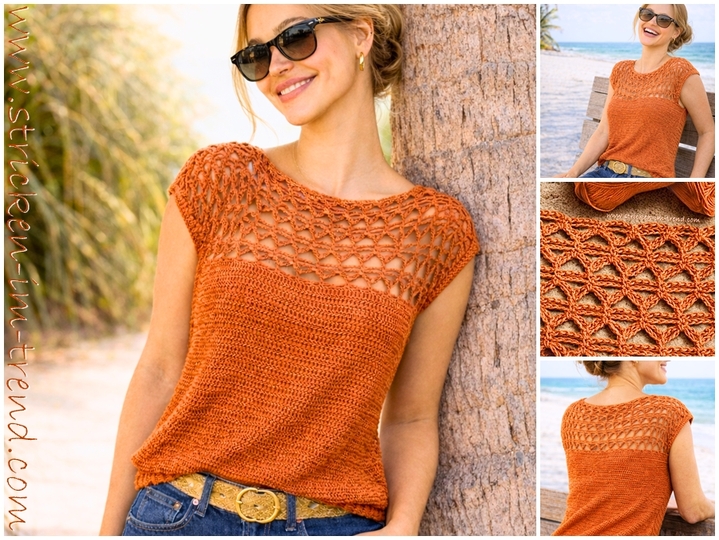
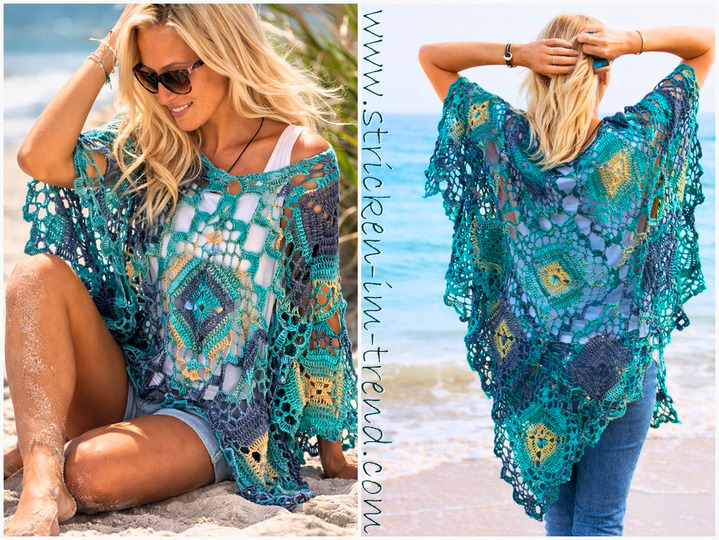
Summer patterns that go with this article
Style knows no Size.
An initiative by Kathrin Parlatan | stricken-im-trend.com
Advertising note: This article contains advertising and links to CrazyPatterns .