
When Other Shops Suddenly Sell Your Knitting Pattern

About product photos, social media, trust — and why community matters more than ever today
Yesterday, I was still writing about why crochet and knitting projects sometimes look different in real life than they do in product photos — about perspective, styling, lighting, expectations and the impact professional photos have online.
Today, I'm unexpectedly sitting here writing the next article already.
Because only a few hours later, I received a message on Ravelry from a customer that honestly surprised me at first.
It was about my knitting pattern "MonteNegro #1".
Apparently, the customer had purchased a pattern through a social media ad — believing it was my original design. Only later did she become suspicious:
The design name didn't quite match, some details seemed inconsistent, and the support felt very generic.
So she started researching on her own.
And that is exactly how she eventually found my original pattern on Ravelry.
Shortly afterwards, I also found her public post in a Facebook/Ravelry community where people openly discussed the incident.
And honestly?
At first, it felt very strange.
Because suddenly you see your own photos and your own design in a completely different context — on a platform you personally have nothing to do with.
👉 Original MonteNegro #1 design:
MonteNegro #1 Knit Top Pattern | Summer Knitting Top S–XL | stricken-im-trend.com
Important Note About Knitcy & Social Media Ads
The website where the customer originally purchased the pattern was Knitcy.
And what makes this especially difficult:
My original design "MonteNegro #1" does not even seem to appear there directly if you actively search for it.
The distribution appears to happen mainly through social media advertisements.
And that is exactly what makes situations like this so difficult to trace today:
Many customers do not arrive on such websites through a normal Google search, but directly via:
- Facebook ads
- Instagram promotions
- Pinterest pins
- or other sponsored posts
As a result, people often never compare things with:
- the original designer
- the real platform
- or the original design itself
And honestly?
That is exactly why I wanted to write this article.
Because unfortunately, this situation does not seem to be an isolated case anymore. Other designers are publicly reporting similar experiences involving copied images and resold designs.
This does NOT automatically mean that every unknown platform is dishonest. But it clearly shows how important it has become to look more carefully at social media advertisements — especially when:
- the design name and photos do not match
- hardly any real designer information exists
- support responses feel very generic
- or the original designer cannot be found anywhere
That is exactly why:
If something feels off, please take a few minutes to research before buying.
Often, it only takes:
- a Google reverse image search
- a Ravelry search
- a quick look at social media
- or asking the community
… to find the original source.
Why I'm Writing About This
No — not to start a public witch hunt.
And not to spread panic either.
But because this situation highlights a topic that now affects many independent designers:
copied product photos, questionable social media ads, repackaged listings and shops that profit from the trust other people spent years building.
This does not only affect us as designers.
It affects customers too.
Because in the crafting world, many people are not simply buying "a PDF file".
They are buying:
- trust
- experience
- real support
- accessibility
- community
- inspiration
- and often the personality behind a design
And when all of that is missing, people often only realize later that something felt wrong.
The Modern Craft World Has Changed
I completely understand why many people fall for this.
The websites often look professional.
The advertisements look modern.
The prices sound believable.
And somewhere there are beautiful photos.
How is someone supposed to know at first glance:
- whether the designer actually exists?
- whether real support is available?
- whether the pattern was properly tested?
- or whether the images were simply copied?
Especially beginners often cannot judge this properly.
And that is why awareness matters more than ever today.
Community Protects Community
What made me thoughtful AND grateful at the same time:
The community reacted.
People:
- asked questions
- researched
- searched for the original
- warned others
- shared experiences
- and openly discussed the situation
And THAT is probably one of the most important protection systems we have today:
Community.
Because real crafting people often notice much faster than any algorithm when something simply "doesn't feel right".
And that is exactly why I love this community so much.
What Really Stands Behind A Pattern
This situation reminded me once again:
Today we are not only selling patterns.
We are selling:
- experience
- trust
- real work
- honest support
- technical preparation
- accessibility
- and often many years of knowledge
Because a real design is never created "quickly".
Behind a pattern there are usually:
- drafts
- calculations
- gauge swatches
- revisions
- testing
- photo shoots
- schematics
- updates
- translations
- customer support
- and often countless hours of work
Most people never see that in the final PDF.
🧡 My Conclusion
The modern crafting world offers incredible opportunities:
more reach, more inspiration, more visibility and more creative freedom than ever before.
But because of that, new challenges also appear.
Maybe that means we need to learn again how to:
- look more carefully
- ask questions
- take community seriously
- and appreciate the real people behind designs
Because in the end, this is not just about a PDF.
It is about trust.
#strickenimtrend #maschenmitliebe #supportsmalldesigner #ravelry #community
And Jill — if you happen to read this article:
Even though you did not originally purchase the pattern directly from me, you are always welcome to contact me if you have questions about the design or the project itself.
I'll gladly help you. 💛
And to everyone else:
If you think this article is important, feel free to share it.
Because this issue now affects many independent designers — and just as many customers.
Thank you for paying attention.
Thank you for asking questions.
And thank you for supporting originals.
All my love,
Kathrin 🌸
FAQ & practical tips for buyers and designers
After today's incident, I received many messages, comments and questions — both from people who buy patterns and from fellow designers.
That's why I wanted to answer the most important points here in one place.
Because this topic no longer affects only individual shops or individual designers.
It affects the entire creative online world:
- fiber arts
- design
- product photography
- social media
- trust
- and the question of how we can still recognize original work online today
Maybe this section will help put some of these things into perspective — both from a buyer's point of view and from a designer's perspective.
❓ FAQ – Buying crochet & knitting patterns safely online
1. How can I recognize whether a pattern is original?
Check whether there is a real designer or brand behind the design.
Is there:
- a website?
- social media profiles?
- projects from other customers?
- blog posts?
- older designs?
- an active community?
Original designers are usually visible and reachable.
2. Are new shops automatically suspicious?
No, absolutely not. There are many new and small platforms run by honest sellers. You should only become cautious when several things feel inconsistent at the same time — for example images, names, descriptions or support.
3. Why are product photos copied so often?
Professional photos create trust. That is exactly why they are often reused or taken out of context to make products appear more credible.
4. What can I do if a listing feels suspicious?
Search for:
- the design name
- the designer
- images
- projects on Ravelry
- or social media profiles
- also on other trusted platforms such as CrazyPatterns, Etsy, etc.
Often this quickly leads you to the original designer or to helpful information from the community.
5. Why is real support so important for patterns?
Especially with knitting and crochet patterns, questions often come up regarding:
- yarn
- sizing
- adjustments
- techniques
- gauge swatches
Real designers know their own designs and can usually help directly.
6. Does this problem only affect big designers?
No. Small independent designers are especially affected because their images and designs can often be copied more easily — especially through social media and automated shops.
7. Why has community become so important today?
Because real people often notice much faster than algorithms when something feels wrong. Recommendations, experiences and mutual warnings help many customers recognize original work more easily today.
❓ FAQ – What can designers do if their images or designs suddenly appear somewhere else online?
1. Stay calm and document everything first
Even if your first reaction is emotional:
Do not panic immediately.
What matters most is:
- taking screenshots
- saving links
- documenting posts
- saving names and platforms
- storing advertisements
- saving comments
Because many of these websites later change content or suddenly disappear.
2. Check whether your own images are being used
Product photos are especially important from a copyright perspective.
If:
- your photos
- layouts
- collages
- or product presentations
are being used without permission, you often already have a strong basis for reporting the issue.
In many cases, images are even easier to prove legally than the pattern itself.
3. Report copied content and advertisements
Many platforms now offer direct ways to report copyrighted material.
For example:
- Facebook / Instagram ads
- Pinterest pins
- Google search results
- product listings
- copied images
Especially social media ads are often a major factor because they generate visibility for these shops in the first place.
4. Use DMCA reports
Many international platforms work with so-called DMCA reports (copyright infringement reports).
These can be used to report:
- stolen images
- copied content
- product photos
- specific listings
It sounds more complicated than it often is. In many cases, all you need is:
- the link to the original
- the link to the copied version
- and confirmation that you are the original creator.
5. Inform Google
Google also offers ways to report copyrighted content or images.
This can lead to:
- search results
- images
- or even specific pages
being partially removed from search results.
This can be especially useful when product photos have been copied.
6. Contact hosting providers or payment services
Many shops operate through:
- hosting services
- payment providers
- shop systems
- advertising platforms
If multiple complaints are submitted, this can affect:
- advertising
- visibility
- payment processing
- or even the operation of the shop itself.
7. Seek legal advice
Not every case immediately requires a lawyer — but sometimes legal advice can be very helpful.
Especially when:
- larger financial damages occur
- content is massively copied
- or entire PDFs are being redistributed
professional legal guidance can help evaluate the next steps more safely.
8. Take community seriously
Many of these situations are discovered only because customers or other creatives ask questions.
That is why it helps to:
- stay friendly
- communicate calmly
- take people seriously
- and inform openly
Community can become one of the most important protection systems today.
9. Make your own brand visible
And maybe this is the most important point of all:
People do not only remember a pattern.
They remember:
- personality
- style
- real stories
- honest support
- recognizability
And that can ultimately become the biggest difference between an anonymous shop and a real designer.
Would you like to dive deeper into my world of stitches?
Explore my patterns, browse the blog or join the community!
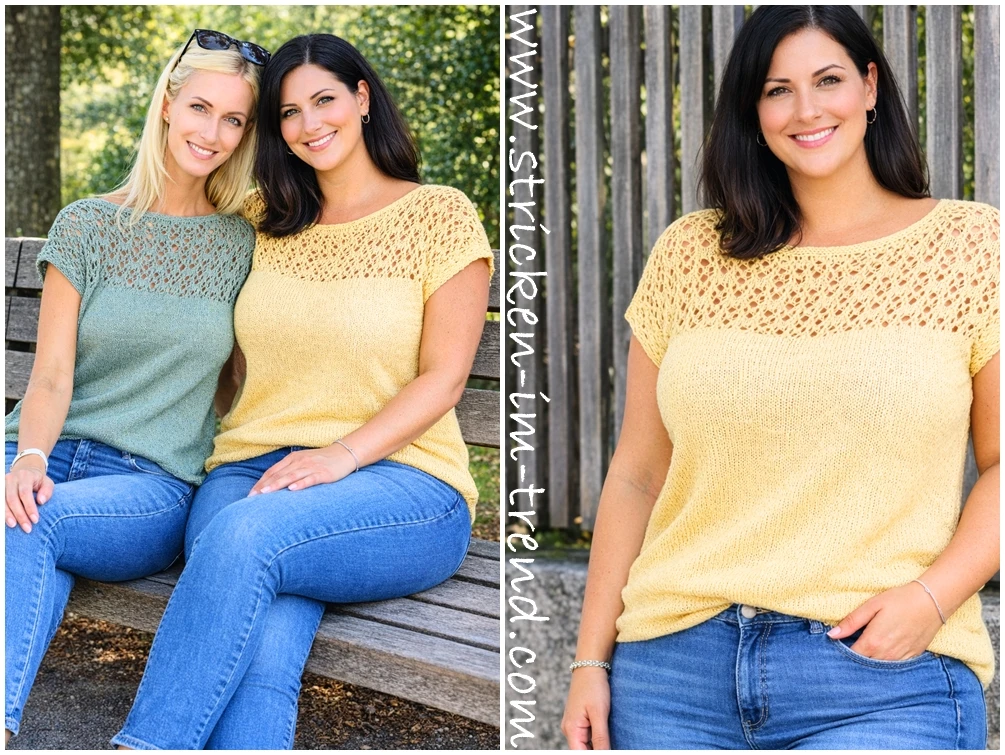
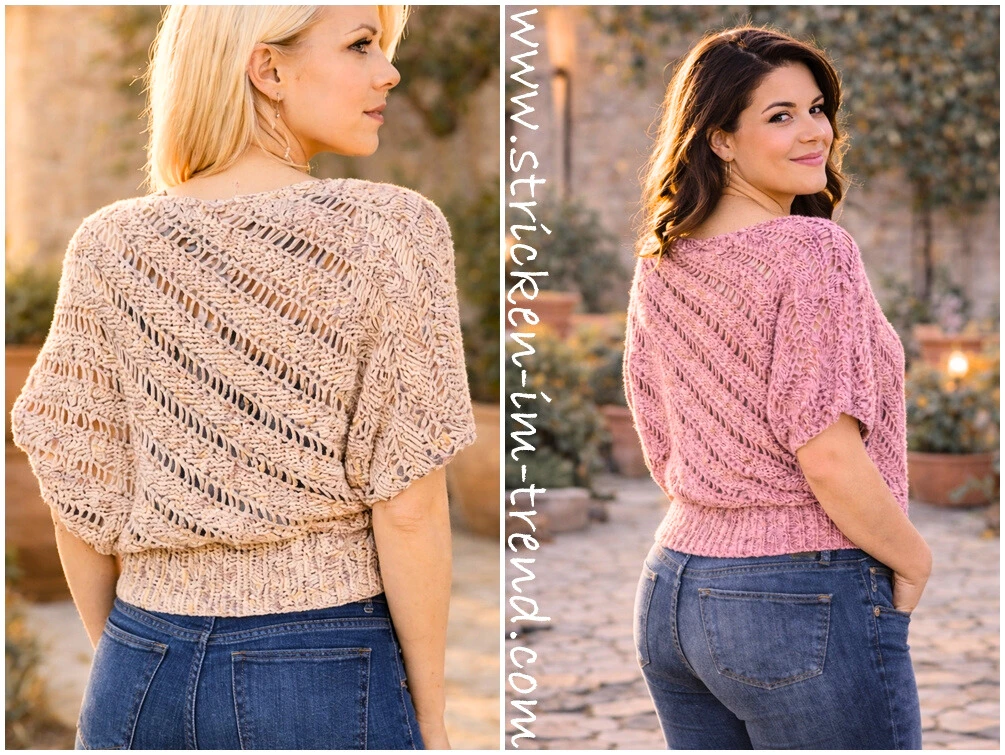
Popular patterns from stricken-im-trend.com
Maybe your next project is already waiting for you – discover some of my most loved designs.
Style knows no Size.
An initiative by Kathrin Parlatan | stricken-im-trend.com